
You don’t expect antivirus software to spread malware, but it happens. Tap or click here for how this malware can eavesdrop on your calls using your phone’s motion sensors.
Phishing scams are also far too common. Maybe you get a receipt for AV software you never bought, or a marketing email that looks legitimate buts leads you to a bogus page ready to take your credit card info.
Before you get duped, read on to learn more about how one version of this scam works and what you can do about it.
If you get this email, ignore it
Just because a well-known company’s name is attached to an email doesn’t mean it’s legitimate. Scammers often use the branding, logos or colors from retailers or services to trick potential victims.
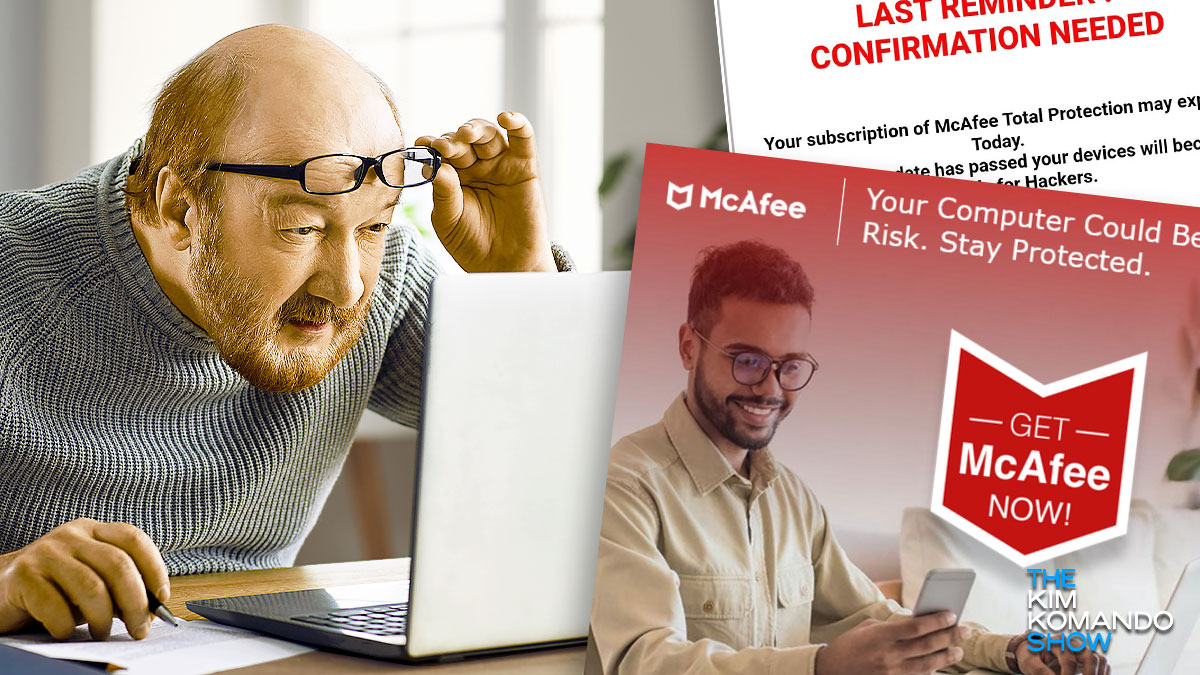
In the latest scam, the phishing email impersonates McAfee with an accurate color scheme and logo. It looks to be a marketing email to protect your computer. There’s a big red flag, though: The sender address leads is a long, strange string of characters.
The subject line includes a confirmation number to prompt you to open the email. Once you do, maybe you’ll think, “Hmm, I do need antivirus software.” But the link inside doesn’t link to any official site.
In some variations of this scam, the link will take you to a page where you must verify the card details used in a…
