
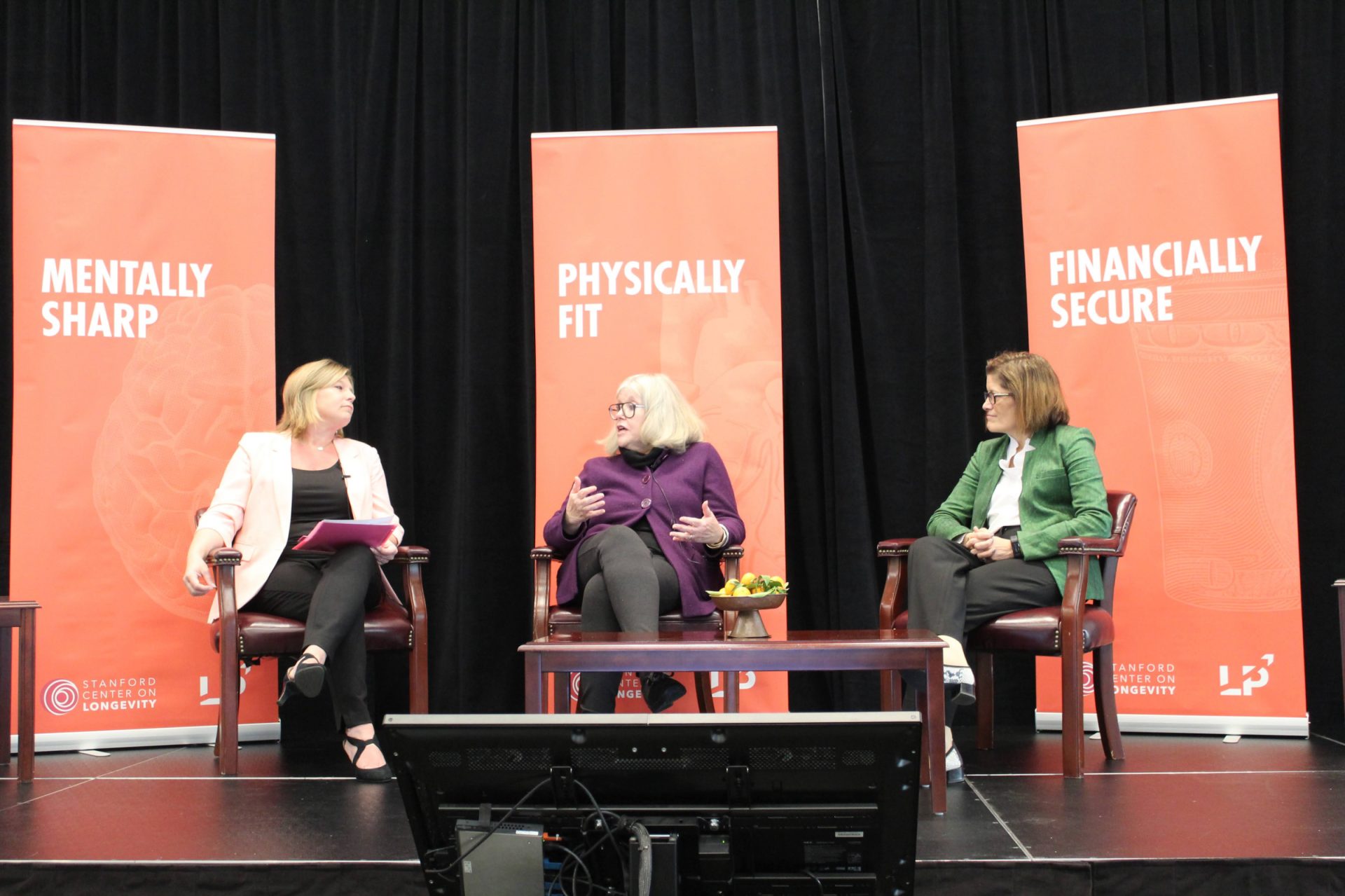
This week the Stanford Center for Longevity has been hosting the “Century Summit,” a two-day conference on the issues and opportunities facing an aging population.
The second day of the conference took a particular focus on the increasingly common reality of a “60 year career,” with a greater number of adults working not only past the age of 55, but into their 80s and 90s.
This conversation around lifelong employment, and the lifelong learning that accompanies it, spanned most of the morning panels, which considered questions around access to good careers, funding longer life, and how American companies handle older workforces as more adults find themselves with “60-year careers.”
Data from the U.S. Bureau of Labor Statistics shows that these questions aren’t hypothetical — the number of adults age 55 and above that are part of the labor force has increased by over 2% between 2007 and 2017.
The Bureau of Labor Statistics data set doesn’t offer much detail about what portion of that growth is accounted for by the population traditionally considered “seniors” — those over the age of 65 — however, population projections published by the California Department of Finance Demographic Research Unit suggest that it will be substantial, based upon the projected growth of the 65+ population.
According to those projections, by 2052 the population age 65 and above will account for 26% of California’s total population, which translates to over 11.3 million seniors.
Not only do these…
