
SkyQuad Drone Reviews
In the simplest definition, a drone is an unmanned aircraft. Using software-controlled flight plans that collaborate with sensors and a global positioning system, a drone is a flying robot that can be commanded remotely or made to fly on its own (GPS).
Drones are the go-to device to take on some of the toughest duties in the globe when the extents of human prowess are dreadfully short in supply because they can be controlled remotely and flown at varying distances and heights. When there is a terrorist attack, they can be found providing law enforcement and the military with a real-time report or assisting in the hunt for survivors after a hurricane or tsunami.
Drones have transitioned from areas of violence into our homes. They are helpful for photographers and serve as amusement during adventures.
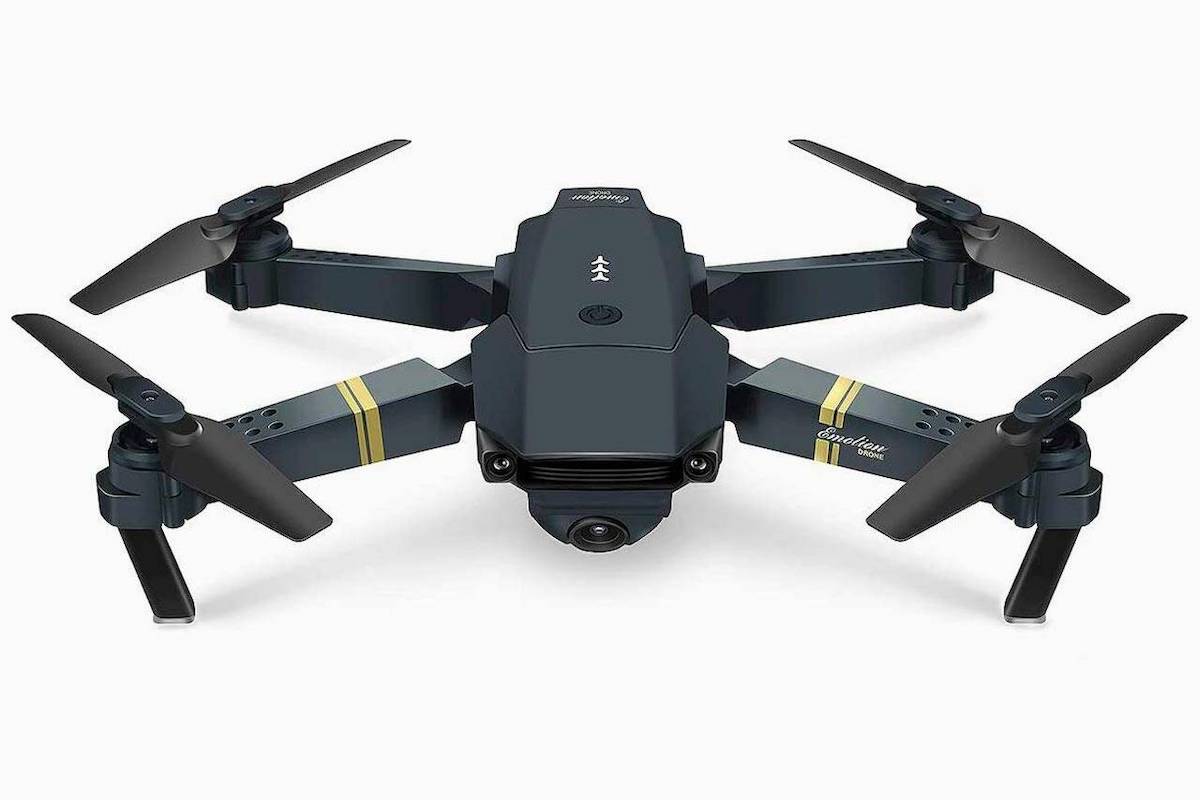
In this SkyQuad Drone Reviews, we will be looking at a type of drone- The quadcopter.
Quadcopters are small, remote-controlled devices that are capable of taking breath-blowing photos and videos in any environment and at any height. The only uses for quadcopters at first were military ones. They are now essential, especially for those who want to capture stunning images and films from any angle.
Modern quadcopter models are portable, foldable, and use high-tech technologies to avoid obstructions. In addition, well-known quadcopters like SkyQuad have claims of being 100% user-friendly, foldable, and have a stylish yet compact design. We will be looking at the different features, some tips, pricing, and well the advantages and disadvantages of buying the SkyQuad.
Tips to Consider Before Purchasing a Drone
The idea of radio-controlled aircraft is nothing new, but drones differ from the toy airplanes and helicopters of the past. One benefit is that they are simpler to fly. More importantly, drones are a wonderful tool for taking genuinely incredible aerial photos and films because of their inherent steadiness and advancements in camera technology .
You can certainly thank a drone every time you watch one of those incredible wildlife documentaries where wild animals pursue each other across the plains or Hollywood blockbusters with shimmering cityscapes. Therefore, it makes sense that home users would want to take some breathtaking photos and videos of their own. Drones are also getting cheaper as they gain in popularity.
There are a few things you should know before purchasing a drone of your own and spending what might be a sizable chunk of money.
- Get to know the many types of drones
Every activity requires learning a completely new skill and details. Flying a drone is similar. There are a few phrases you need to understand before you can even decide which drone you want to buy. Mostly because they are not all made equal.
Are you trying to find a drone to do some awesome aerial tricks? Or are you more drawn to aerial filming or photography? What kind of drone you need will depend on the answers to these questions. Although many machines are multifunctional, some are more effective at particular jobs than others.
Also, be conscious of your own abilities. Do you feel at ease using gadgets? While some drones need to be extensively assembled before usage, others are essentially ready to use right out of the box. Your ability to choose the best drone for your purposes will be greatly aided by your awareness of your limitations.
Understand the following words in particular:
RTF (Ready To Fly) As the name suggests, RTF drones are the simplest to use when starting out. RTF drones are the greatest option for beginners because they include everything you need to get going.
Never assume that “ready to fly” actually means “ready to fly.” It might still need additional manipulation, such as screwing on the rotor blades and charging the batteries. However, RTF drones are the simplest to use and come with everything you need to get started flying in a single box. RTF drones are, of course, more expensive than other types due to this. The convenience of not having to complete several assemblies is something you pay for.
Bind and fly are also known as BNF. The transmitter for BNF drones is not included; you can either buy one separately or use the one you currently own.
Advanced users who may already have a transmitter that they feel comfortable using are big fans of BNF drones. They are less expensive than the options that are ready to fly because the transmitter is not included. But getting started takes more effort.
PNF, or plug and fly, is another name for PNP, which stands for plug and play. This moniker gives the impression that launching one of these drones into the air will be easy, but that isn’t always the case. PNP drones only cost the drone itself; they do not include a transmitter or a receiver.
You might be thinking that drones aren’t very useful without the transmitter and receiver. You’d be correct, too. However, if this isn’t your first drone, it can be advantageous to connect the device to a receiver and transmitter you already have.
This way, you may often achieve a longer range than you might from a ready-to-fly option without having to learn a whole new set of controls. Additionally, compared to the previous two drone types, these drones are frequently more affordable.
Nearly ready to fly is abbreviated as ARF. It’s generally best to avoid these drones if you’re just getting started with them because you’ll quickly discover that their idea of “nearly” is considerably different from yours. These frequently require assembly, which might be challenging if you don’t know what you’re doing.
ARF Drones are well-liked by people who want to race their drones since they allow for a lot of modification. But it’s best to leave them in capable hands. You don’t want to spend a lot of time and effort developing your drone only to crash it on the first flight because you’re inexperienced.
- Look out for Specific Features
Drones are equipped with a wide variety of functionalities. And when it comes to purchasing a drone, the features are frequently what makes the difference. If you’re purchasing a drone for a certain function, you should look for one that is best suited for that usage. But don’t ignore additional features. Sometimes a feature you anticipate using frequently turns out to be more or less useless to you, while something else you didn’t give much thought to becomes your favourite thing. In particular, if you’re purchasing your first drone, this is true.
Of course, the more functions a drone has, the more expensive it will be, as is the case with most things in life. Therefore, you must strike a balance between having all the features you desire and without overpaying for those you won’t use. Any future drone pilot must take certain factors into account. Others, though, are more of a “great to have, but only necessary for very specific uses” kind of thing. Let’s start with the main characteristics.
Important Considerations
Flying a drone is challenging, especially for novices. You can overcome the learning curve required to fly one of these aircraft properly with the aid of a few features. Furthermore, if you want to enjoy owning a drone, several functions are practically a requirement. Even at the low-cost end of the drone market, these are the essential features you should search for.
Material Used: Drones can be pricey, and you want a machine to last as long as possible if you’re going to spend a lot of money on it. Most affordable drones are composed of plastic. Though inexpensive and lightweight, this material isn’t always dependable. At the very least, go for ABS plastic, which is more durable than normal plastic, if you’re attempting to keep expenses down.
Drones made of fiberglass and carbon fiber, on the other hand, are significantly more durable. Additionally, they cost a lot more money. Consider it an investment. If you know you’ll use your drone frequently; the added expense can be justified. On the other hand, you might want to avoid using aluminium drones because they are lightweight and less resilient to mishaps.
Size of the Device: Generally speaking, the farther away from the transmitter your drone can fly, the better. While more expensive versions can fly for miles without losing touch with the transmitter, cheaper drones may only have a range of about 30 metres.
Since a larger range will enable the drone to reach locations a human simply couldn’t, the range becomes especially crucial if you’re interested in employing a drone for photography or filmmaking. The range becomes especially crucial if you’re interested in employing a drone for photography or filmmaking.
Note: Just because a drone claims to be able to fly a certain distance doesn’t necessarily imply it can. Radio waves are easily interfered with by one another, and drones use radio waves to receive instructions from the transmitter.
There will always be some radio wave interference with your drone unless you live in a cabin in the woods. This interference may significantly reduce the range from the advertised value in some areas.
For instance, flying a drone close to cell phone towers will significantly reduce the range from what is promised. The signal from your drone can also be disrupted by stationary barriers like mountains, trees, and buildings. The best course of action is to purchase a drone with a range that is greater than you anticipate needing, keeping in mind that the quoted range is a maximum that you might never actually accomplish.
Taking Off: Drones can’t hover in the air for very long because, unlike passenger planes, they don’t carry large fuel reserves. The battery life of a drone is limited; while a flight period of 20 to 30 minutes is often acceptable, some less expensive models may only be able to hover for 5 minutes.
Budget is always a consideration when making any purchase, but you should…
