
Scams, and the con artists behind them, are forever evolving and becoming more sophisticated and harder to spot.
ACM has compiled a list of current scams identified on sites such as scamwatch.gov.au, cyber.gov.au and the Australian Competition and Consumer Commission’s website dedicated to informing people about fraudulent and dishonest activities.
Facebook marketplace scams
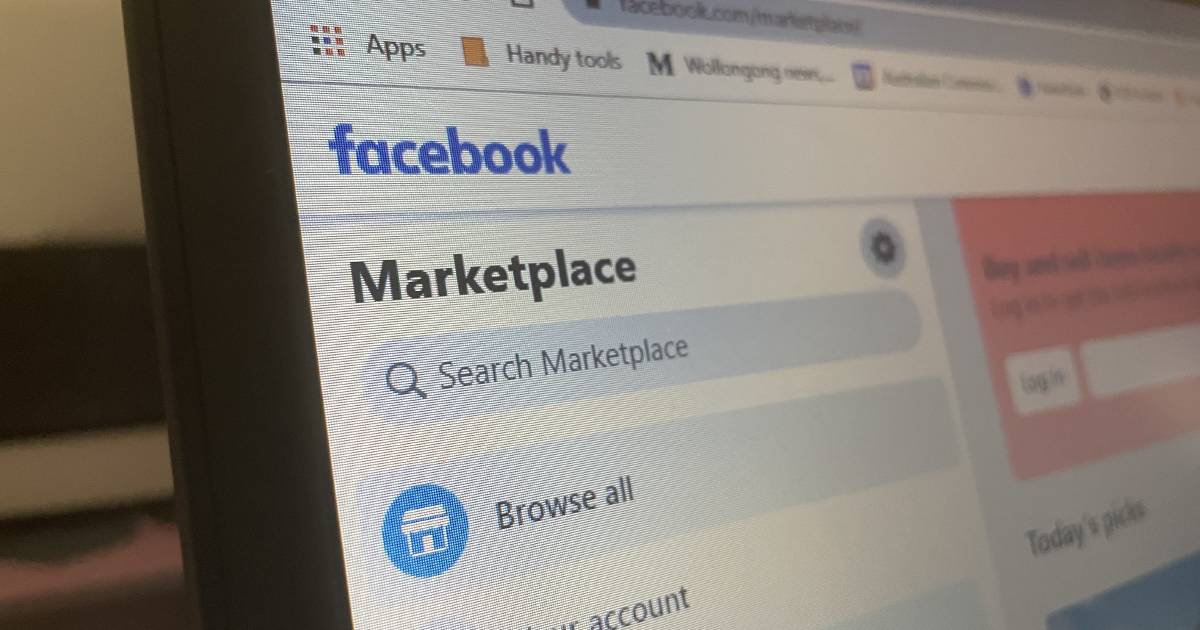
Marketplace users are encouraged to be familiar with the telltale signs of fraudulent activity. File picture.
- Facebook Marketplace has become one of the most popular online selling platforms worldwide, making it an attractive platform for scammers.
- Scammers may pose as a buyer or seller so Marketplace users are encouraged to be familiar with the telltale signs of fraudulent activity.
- These signs may include a request to sent an item before payment is received; a deal that looks too good to be true and requests for payments that are hard to reverse such as gift cards or unregulated payment methods such as cryptocurrency.
- Scammers are using Facebook Marketplace to advertise rentals properties that don’t exist or aren’t available, taking deposits before disappearing.
- Other scammers are using the platform to sell broken, damaged or stolen goods.
- Facebook has commerce policies and community standards that aim to regulate consumer activities.
- You can report policy breaches via its Report Seller function within the platform.
- For more information visit: https://www.facebook.com/help/196126404168290

You can report scams to the ACC via www.scamwatch.gov.au
- Scamwatch.gov.au provides a platform to report scams to the Australian Australian Competition and Consumer Commission.
- To report a scam visit www.scamwatch.gov.au/report-a-scam
- If you’re the victim of identity theft or cybercrime call the Australian Cyber Security Hotline on 1300 292 371.
- It you have been scammed you should cease all contact with the scammer; report the scam as soon as possible, contact your bank or financial institution and document your experience and details about the scammer such as email addresses, websites and phone numbers.
Keeping your social media account secure

Accepting friend requests from strangers gives potential scammers access to any personal information that may be on a profile page. File picture
- Scamwatch.gov.au is urging people to be careful about who they connect with on social media.
- Accepting friend requests from strangers gives potential scammers access to any personal information that may be on a profile page.
- Access to such information could make a social media user vulnerable to a scam.
- Facebook recommends you don’t use your social media password anywhere else online, and never share it with other people.
- Passwords should be hard to guess, so don’t include your name or common words.
- Scammers may create fake websites that look like Facebook and ask you to log in with your email and password.
- Always check the website’s URL before you enter your login information.
- Log out of social media accounts when you use a computer that you share with other people.
- Don’t accept friend requests from people you don’t know as scammers may create fake accounts to friend people.
- Becoming friends with scammers might allow them to spam your timeline, tag you in posts and send you malicious messages.
- Never click suspicious links, even if they appear to come from a friend or a company you know.
- This includes links on Facebook (e.g. on posts) or in emails.
- For more information about keeping you social media account secure you can visit: https://www.facebook.com/help/mobile-touch/202438353130736

ASIC is alerting investors about fake fixed term or high interest deposits in various currencies claiming to be a ‘new breed of investment’. Picture: file picture
- People are being warned of a sophisticated and evolving scam targeting investors.
- ASIC is alerting investors about fake fixed term or high interest deposits in various currencies claiming to be a ‘new breed of investment’.
- Offers appear to include common phrases such as ‘beating inflation’ and ‘meeting liabilities’.
- These offers often include the unauthorised use of the Australian Government Coat of Arms and ASIC’s and/or APRA’s logos.
- Scammers copy contract documents from real financial firms & replace the contact details with their own.
- ASIC is urging people to be wary of unsolicited contact, especially when the person contacts you to invest. If someone contacts you, hang up or do not reply.
- Investors should also be suspicious of interest rates that are higher than other alternatives. If an investment offer guarantees higher returns than other investments in the market, it is either high risk or it could be a scam.
- The use of phrases like ‘A new breed of investment’ or ‘Sustainable income / capital growth / beating inflation / meeting liabilities’ may also indicate that the “opportunity” is a scam.
- Documentation with the Australian Government Coat of Arms and ASIC’s and/or APRA’s logos. Any offer of financial products containing ASIC’s logo, the Australian Government Coat of Arms, or APRA’s logo, is a scam.
- For more information about investment scams and what to look out for, visit the Investment Scams page on ASIC’s MoneySmart website.

Customers may receive emails that appear to be from a trusted Coles email address, offering the opportunity for you to win a gift card or voucher which can be collected in store. These scams are sent in an attempt to obtain personal information such as a bank account or credit card numbers as well as passwords and are currently doing the rounds in August 2022. Picture: www.coles.com.au
- Coles, on its website, is advising customers to be aware of text messages, phone calls, websites, competitions and other unsolicited contact that use the Coles brand without Coles’ permission.
- These offers predominantly attempt to collect your personal details, financial information or request payment for goods or services.
- Coles says it will never request personal or banking details in unsolicited communications and legitimate businesses or government agencies will never request payment in gift cards.
- Consumers are encouraged to be wary of requests to complete customer satisfaction surveys that promises a reward at completion – where you are asked for personal details or financial information; sharing/liking a Facebook post in exchange for a gift card/voucher; calling a specific phone number and providing personal information; clicking on an email that links with a malicious website; purchase and provide the redemption code from gift card/vouchers.
- The retailer is also reminding customers that all communication from Coles social media accounts will have a blue verified tick.
- Customers are being contacted by scammers claiming to be from a government agency or business, or receiving emails claiming to be from someone they trust, such as their boss and urged to purchase gift cards at their local Coles store to pay for items such as a tax debt/fine to avoid arrest, an outstanding bill for goods or services, for team rewards or just as a favour. They are then instructed to provide the 16-digit code (from the back of the card) and once done the card is emptied and the customer has lost their money.

Think before you click: Scamwtch.gov.au is warning people not to fall for one of the latest scams doing the rounds which involves unsuspecting victims downloading a “customer service” app.
- Scamwtch.gov.au is warning people not to fall for one of the latest scams doing the rounds which involves unsuspecting victims downloading a “customer service” app.
- Scammers might call claiming to be from a bank or other financial institution.
- They may ask you to download a ”customer assistant app”.
- Doing this gives them remote access to your device.
- From there, they can easily steal your passwords and drain your bank accounts.
- Never give a stranger remote access to your device.
Has your account really been suspended? Or is it a scam?
- Text messages, emails and other notifications that say your account has been suspended may seem like they require urgent action but in reality, they could be a scam.
- Phishing texts such as these aim to create a sense of urgency that encourages you to act quickly, according to Scamwatch.
- In reality, the link is a scam designed to steal your card and banking information.
- If you’re concerned, log into your account as normal or contact your account organisation directly.
- Do not click on the link.
- Scamwatch is urging people not to fall for the word “free” when it comes to offers of products, investments, or job offers.
- Scammers play on your emotions and lure you in with false promises.
- Always think twice about giveaway offers – they could be phishing for your personal and financial information.
- By sharing the offer, you could be helping them scam others too.

DON’T FALL FOR IT: Scammers are using sophisticated methods to fool unsupecting parents into parting with money.
- Scamwatch is urging people to beware of “mum and dad” scams targeting unsuspecting parents.
- Scammers are posing as family members using a different number and asking for money.
- Often they will start a conversation using evasive language by telling the parent that they are the “youngest and cutest” of the siblings in an effort to build trust and avoid giving actual proof of the relationship.
- The scammer will likely say they had to get a new phone number or messaging device.
- They might even ask you to block or delete their ‘old’ number.
- The motive behind the scam is to convince the parent that they should transfer money to the scammer.
- Once the unsuspecting parent is engaged in the in conversation, the scammer will likely ask to borrow money or have a payment made on their behalf.
- The scammer may say that online banking is unavailable on the new device – and an offer to pay it back.
- If you get a message like this, always call your relative on their usual number to confirm.
- Do not transfer money without confirming the identity of the recipient.
- It is understood that this scam has defrauded Australians of more than $2 million…
