
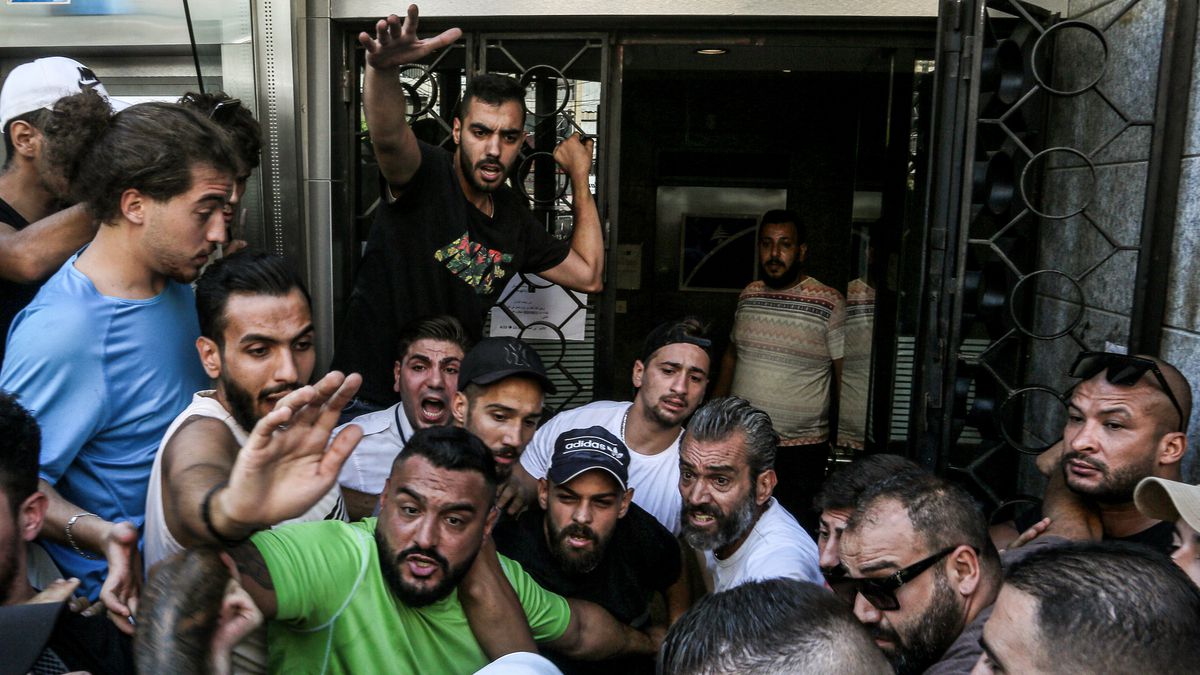
Lebanese activists gather outside a local bank in support of Abed Soubra, who stormed the branch demanding access to his own accounts, in Beirut on Sept 16. Lebanese police detained Soubra after he entered the bank and, armed with a gun, demanded access to his deposits. It was the third such incident in Lebanon that week alone.
Marwan Naamani/Picture Alliance/Getty Images
TRIPOLI, Lebanon — On a recent weekday in Lebanon’s second-largest city, the atmosphere at a branch of the IBL Bank is tense. Security and police are gathered outside. Soldiers are clutching M16 rifles. People are crowding the entrance.
Inside, Zahra Khaled, a 53-year-old in a wheelchair who’s in urgent need of medical care, is refusing to leave until she is given her savings. The bank has frozen all of it — tens of thousands of dollars. After selling personal possessions and exhausting all other options, she and her adult daughter have now entered the bank and will not budge.
Lebanon’s banks froze most accounts three years ago amid an economic collapse. This year, faced with increasingly desperate circumstances, more people are resorting to extreme measures to access their savings. Khaled’s protest is one of the milder tactics. Other Lebanese have taken to robbing banks for their own funds, brandishing real or toy guns. Most take only what they are owed, and so far no one has been reported killed in a robbery.

A man speaks to negotiators from behind the…
