
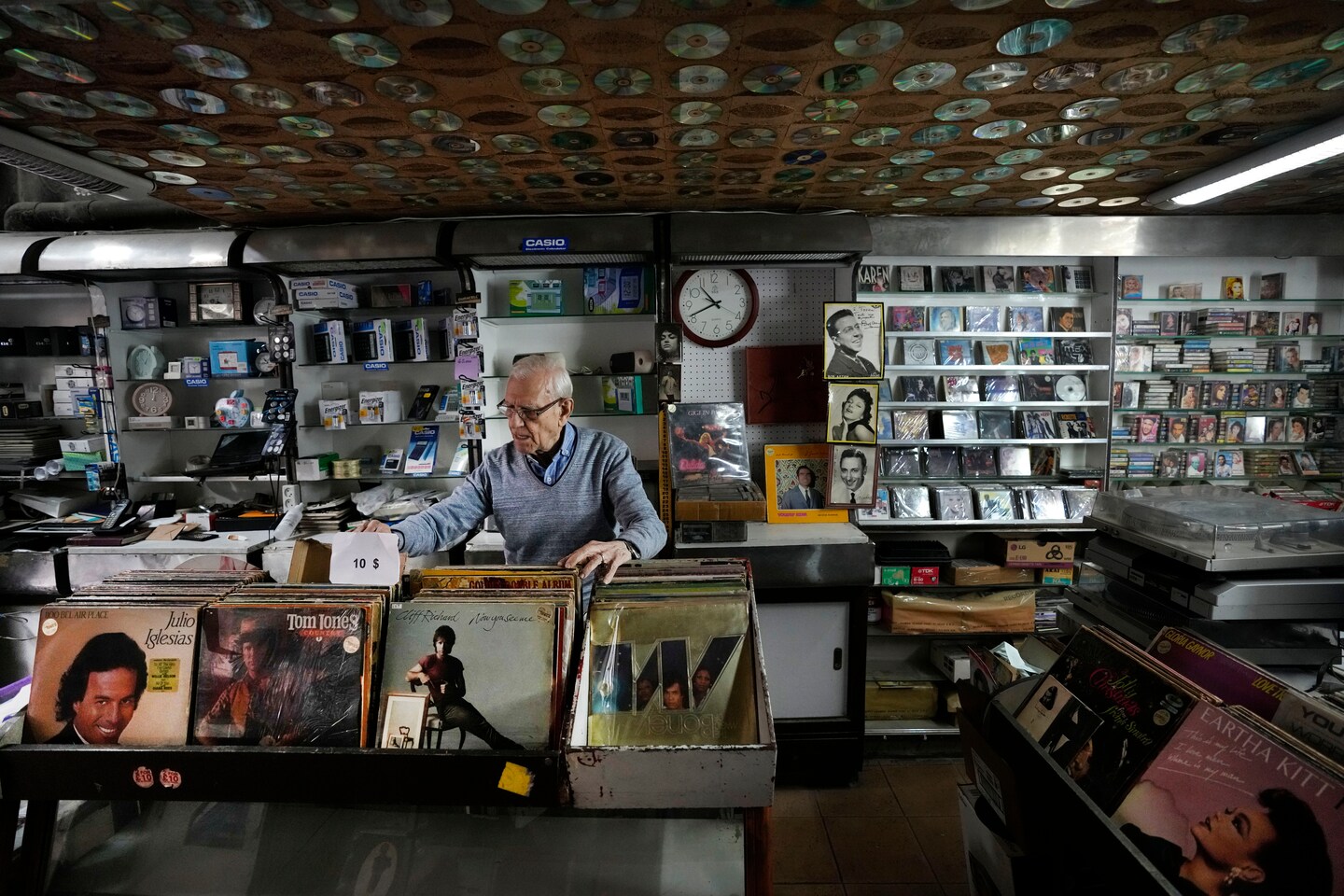
Now many of its stores are shuttered. Poverty-stricken Lebanese and Syrian refugees beg on its sidewalks. Trash piles up on its corners. Like the rest of Lebanon, the economic crash swept through the street like a destructive storm.
At 88 years old, Eid remembers the bad times, during Lebanon’s 1975-1990 civil war, when Hamra saw militias battling, assassinations at its cafes and, at one point, invading Israeli troops marching down the street. Nothing was as bad as now, Eid says.
“We have hit rock bottom,” he said. Few customers come to his Tosca Music Shop and Electronic Supplies, which sells records and a variety of electronic clocks, calculators and watches. His business has dropped 75%.
The scheme finally collapsed in what the World Bank calls one of the world’s worst economic and financial crises since the mid 1800s.
The currency’s value evaporated, salaries lost their buying power, dollars in banks became inaccessible, prices skyrocketed in a country where nearly everything is imported. As much as 82% of the population now lives in poverty, according to the U.N. Unemployment is estimated at 40%.
While the economic system collapsed, the political one hasn’t. The same leadership, entrenched in power, has done virtually nothing to address the crisis. Refusing basic reforms, they have made no progress in talks with the International Monetary Fund.
A walk…
