
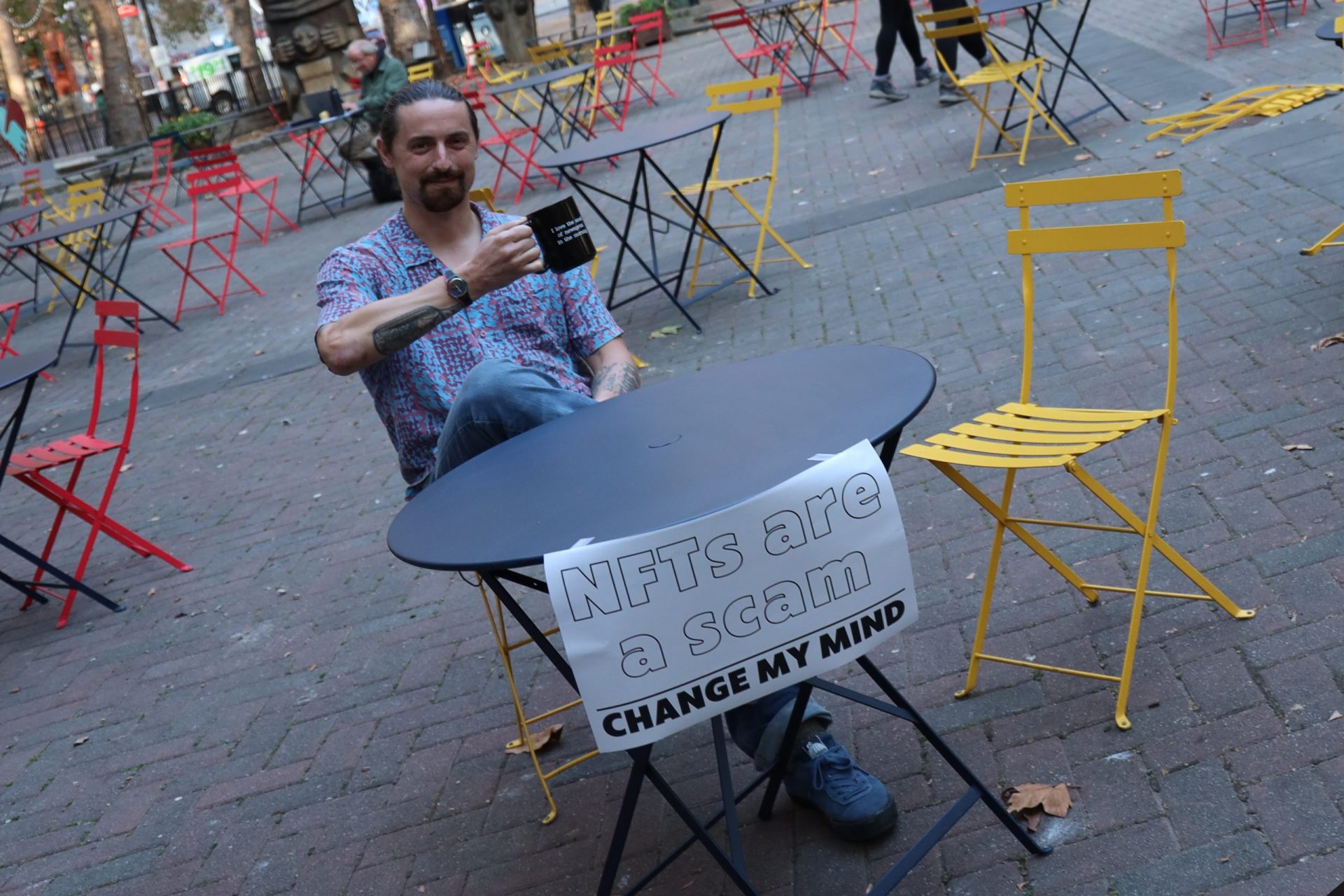
Back in March, out of a kind of morbid curiosity, I reviewed Seattle’s very own NFT museum. The review was not a favorable one: I ultimately concluded that NFTs were, for all intents and purposes, a scam.
NFT enthusiasts, entrepreneurs and publicists inundated my inbox for a brief period afterward. Not a one of them had read the article, and all of them wanted me to write about their NFT, which was definitely “the next big thing.” At least they were proving my point, I guess.
More recently, I got a different pitch, one from a woman named Rachel at a fancy-sounding agency named Maneuvre (you know it’s fancy because that’s French for maneuver). She had read the article, and her email contained fully formed thoughts about it.
“I understand your point on NFTs,” she wrote, “but I’d also like to introduce you to a totally different perspective on them — not having ‘exclusivity as an end goal,’ as you wrote, but actually having charity, community and doing well as the main purpose.”
Any journalist can tell you that part of having your byline online, especially when your email is associated with it, is getting a never-ending stream of bad pitches. If you’re lucky, they might be tangentially related to your beat; most are just whatever fulfills some account executive’s quota of sent pitches. If you’ve written articles about how much you hate meat, you’ll get pitched a bespoke barbecue mail-order subscription box. Conversely, if…
