
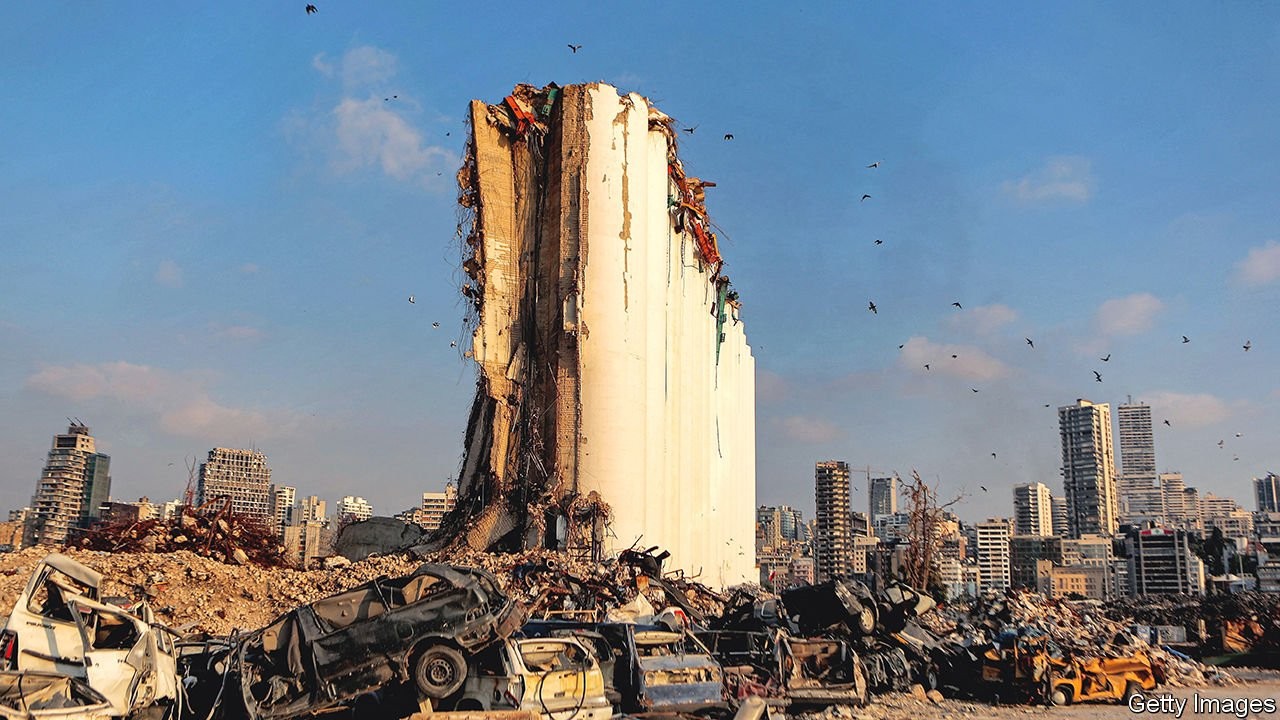
ONE WAY to predict the future in Lebanon is to look at election billboards and imagine the opposite. The last time voters chose a parliament, in 2018, roads across the country were lined with cheery messages. “Our port will come”, read one, referring to a tourist harbour that would woo cruise ships and boost the economy. Another hailed Lebanon’s financial stability: “Currencies around us are collapsing, but our lira is firm.” In the years that followed, Lebanon’s main port was wrecked by one of the largest non-nuclear explosions ever seen (pictured above), and the lira lost more than 94% of its value.
Your browser does not support the <audio> element.
Save time by listening to our audio articles as you multitask
The same pattern may apply this year. Lebanon will hold legislative elections on May 15th. Nattily dressed candidates grin from ubiquitous billboards. The most common word on them seems to be “change”. Everyone promises reform. Yet the most likely result is more of the same.
If ever there was a moment for a throw-out-the-bums vote, this should be it. Lebanon is in one of the worst economic crises in modern history. GDP has shrunk by 58% since 2019 (see chart). Annual inflation is above 200%. The minimum wage is worth about $1 a day. The UN counts three in four Lebanese as poor.
In a once-vibrant bit of the capital, young men dive into skips at dawn, looking for something to sell. At…
