
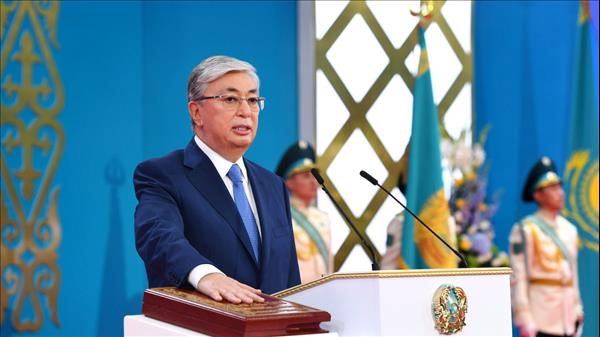
The result of Kazakhstan’s presidential election on November 20 came as no surprise: President Kassym-Jomart Tokayev made mincemeat of his opponent, garnering 81.3% of the popular vote.
Electoral blowouts of this magnitude are possible when the opposition candidates are weak, and the winning candidate has the powers of incumbency: the backing of the state apparatus, a proven track record, and a sympathetic media establishment.
An electoral thumping, whether in Kazakhstan or elsewhere, does not a priori delegitimize an election, but it does raise questions about the viability of competitors or the lack of critical voices. It could just as well suggest that the incumbent’s message resonated with the electorate.
Consider the case of Hungary’s Viktor Orban. It is rare that leaders in parliamentary systems achieve an absolute majority; he achieved such majorities twice in a row. The opposition alleges he uses strong-arm tactics but has not proved that his electoral victories were fraudulent. A more plausible explanation is that voters approve of his policies and his performance in office.
Anticipating Tokayev’s victory, Josep Borrell, high representative of the European Union for foreign affairs, and Charles Michel, president of the European Council, made separate trips to Astana just days before the election ostensibly to reinvigorate the enhanced partnership and cooperation agreement between the EU and Kazakhstan.
It is not far-fetched to assume they…
