
- Red flags include anything in a contract that’s different from what you were told in the sales pitch.
- Contractors should always be licensed and insured.
- Be aware of signing away insurance benefits.
Disasters like Hurricane Ian bring out the best in people – and the worst, including unscrupulous roofing companies, fake charities and unqualified construction workers who prey on victims’ emotions and vulnerability.
“Rebuilding will take months or longer, creating an inexhaustible demand for qualified contractors and debris removal services,” Florida Attorney General Ashley Moody said in a news release. “Sadly, bad actors may exploit this demand to take advantage of people just trying to rebuild their lives.”
Best rule of thumb: If it’s too good to be true, it probably is.
Here are some tips to help you avoid being a victim of scams after Ian, or any disaster.
Always read the entire contract before signing anything. Confirm details including cancellation clauses, final cost, due by dates and other key points. Red flags include anything on the contract that’s different from what you were told in the sales pitch, requirements to pay in full or put down a large deposit before the work is done and extremely low bids for work that should cost much more.
Don’t make hasty decisions. One resident of North Port, Florida, said she’s already been approached by a company that didn’t seem trustworthy based on several points in the proposed contract. “Yes, people are in desperate need,” Alicia Accardi told WUSF Public Media. “What we’re looking at looks awful and we want to immediately fix it. But we need to take a step back, and take a breath, and go slower and make smart decisions.”
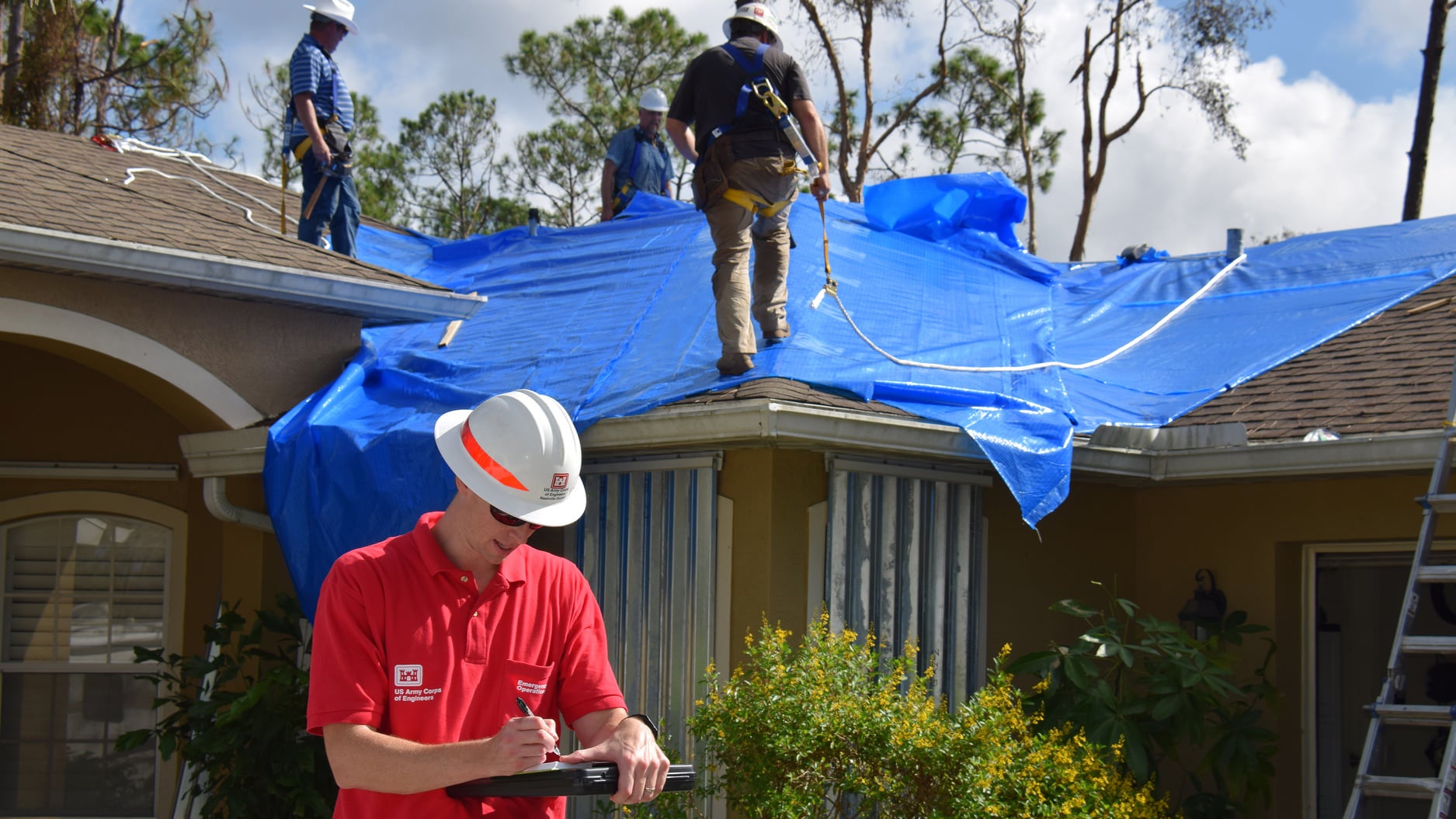
The U.S. Army Corps of Engineers has launched its blue roof program to help homeowners in parts of Florida hit hard by Hurricane Ian.
(U.S. Army Corps of Engineers via Twitter.)
Do your research before signing. Florida requires that construction contractors, roofers and similar companies or individuals be licensed and carry certain types of insurance. The state has a searchable database to look up this information by a company or person’s name. It’s also a good idea to do a general online search and check the Better Business Bureau.
Contact your insurance company as soon as possible. Be cautious of something in Florida called Assignment of Benefits, or AOB. This is when a customer gives their contractor the right to communicate with their insurance, file a claim and receive all insurance payments, cutting the policy owner out of the process.
Safeguard personal information. FEMA workers will never ask for personal information over the phone or via text message. City and county workers won’t ask you for money. Companies or individuals doing cleanup or repairs don’t need your bank account number.
Charities can be scams, too. Research them on websites like Charity Navigator and the Better Business Bureau.
Apply for FEMA aid, even if you’re not sure if you qualify. Most federal money is for people without insurance, but there may be programs that can help anyone. You won’t know if you don’t ask.
MORE:
How To Help Those Affected By Hurricane Ian
Most of Hurricane Ian’s Death Toll In Florida Is From Drowning
Hurricanes Ian, Fiona, Will Likely Be Retired Next Spring
275 Parrots Rescued From Florida Island Bird Sanctuary
The Weather Company’s primary journalistic mission is to report on breaking weather news, the environment and the importance of science to our lives. This story does not necessarily represent the position of our parent company, IBM.
