
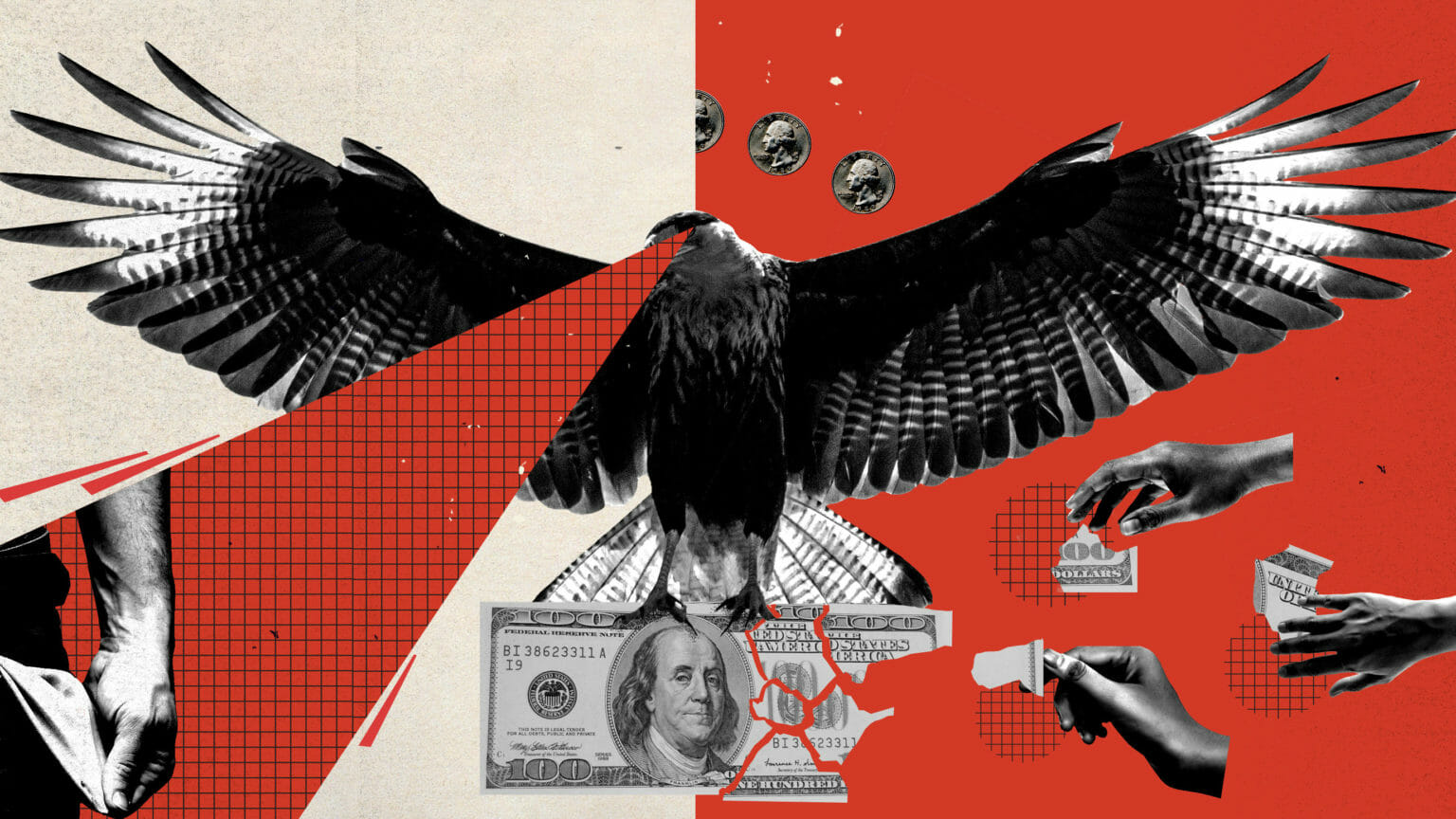
When the Paycheck Protection Program launched during the pandemic shutdowns of spring 2020, it immediately became a chaotic free-for-all.
Called PPP for short, the program offered simple-to-get, potentially forgivable government loans to small businesses. Yet billions of dollars went to companies owned by wealthy celebrities, including Tom Brady and Khloe Kardashian, and companies that thrived during COVID, like many manufacturing and construction firms.
Government officials acknowledge that the program was rife with fraud and did not weed out undeserving applicants. But there was a way to remedy those early errors: Deny forgiveness. That could have thwarted scam artists and forced businesses that prospered to repay the money.
Yet nearly three years after the rollout of PPP, the vast majority of loans have been forgiven.
An NPR analysis of data released on Jan. 8 by the Small Business Administration found that 92% of the loans issued have been granted full or partial forgiveness. That includes loans to companies with mega-rich owners.
“The PPP program seems to have resulted in billions of dollars of fraudulent loans that have ultimately turned into grants,” said Samuel Kruger, an assistant professor of finance at the University of Texas at Austin who co-authored a paper estimating that $64 billion of the nearly $800 billion in loans issued show signs of fraud, such as suspiciously high payrolls and multiple businesses listed at the same home address.
The SBA disputes those findings, but its own inspector general has estimated that at least 70,000 loans are potentially fraudulent. An unknown additional number of loans went to companies that didn’t need PPP funding to survive the pandemic.
And although the Justice Department and other federal agencies have up to 10 years to prosecute pandemic fraud, the SBA’s inspector general has called that pursuit a “pay-and-chase” situation unlikely to recover much money.
NPR dissected the decision-making behind the Paycheck Protection Program that led to it being widely seen as a massive government giveaway. We spoke with numerous bankers, economists and government officials under former President Donald Trump and President Biden — since the program spanned both administrations — to find out why loan forgiveness was so lenient, especially after the highly publicized misuse of the program. Their responses involved copious finger-pointing, blame-shifting and buck-passing, making accountability elusive.
“There are very few things you could do to actually disqualify yourself”
In the frenzied early days of COVID, as PPP was created in great haste to keep businesses from potentially collapsing, the loans were simple to get: Companies simply had to pledge that the economic threat of the pandemic made the funding necessary. But what it would take later to qualify for forgiveness was hazy.
“It was entirely unclear at the beginning,” said Eric Lichatin, a commercial loan officer at Centreville Bank in Rhode Island, which was inundated by calls from customers wanting PPP loans. “The SBA really rushed to get this program out there, which I think they should be commended for … but a lot of the details were very unclear to businesses and banks.”
As the program evolved, its rules became increasingly complicated, and even experts struggled to make sense of them. At one point, the SBA published a list of frequently asked questions on loan forgiveness that was 11 pages long. One consulting firm issued a client advisory with the headline “Fast and furious: The rules for the PPP … continue to emerge at a brisk pace, often updating previous guidance.”
That confusion posed a dilemma for many companies: Should they take the money if they might have to pay it back?
Some banking professionals, including Lichatin, advised their customers to accept the funding, put it in a separate account, and wait to use it until the rules became more clear.
“Then, if you don’t need the money, you can always just pay back the loan,” Lichatin explained. “But you do have it as a safety net available to you in case your business does take a massive hit.”
That recommendation proved wise, because Congress weakened PPP forgiveness criteria over time.
For example, the Paycheck Protection Program Flexibility Act, signed into law by President Trump in June 2020, gave some borrowers full forgiveness even if they didn’t fully restore their workforce: A company could offer a laid-off employee a job, and even if the employee turned it down, the company was still credited with maintaining worker head count.
Congress also expanded the ways the loan money could be spent. Originally, it was primarily meant to keep workers on the payroll. Eventually, businesses could use it for non-payroll costs, including property damage from looting and vandalism.
The rules became so lenient that anyone who received $150,000 or less — which accounts for more than 90% of all borrowers — could get the full loan amount forgiven just by promising they had used the money correctly. No supporting documentation needed.
Some of these changes were called safe harbors, and “given the way the safe harbors are written, there are very few things you could do to actually disqualify yourself [from loan forgiveness] other than out-and-out fraud,” said David Autor, an economics professor at the Massachusetts Institute of Technology who has studied PPP.
In his view, the Paycheck Protection Program made almost any use of the loan money legal — and therefore eligible for forgiveness — and gave the SBA little ability to police bad actors.
“I’d like to make this as easy as possible”
Congress made PPP forgiveness rules increasingly lax because that’s what businesses lobbied their elected representatives for.
At a Senate Small Business Committee hearing in June 2020, Utah Sen. Mitt Romney said some of his constituents were “beginning to be concerned about whether or not they’re going to be qualified for forgiveness” and expressed hope “that we’re not sticklers, that we instead are looking to help people get forgiveness.”
At the same hearing, Louisiana Sen. John N. Kennedy told then-Treasury Secretary Steven Mnuchin that “small businesswomen and small businessmen think that the federal government is going to double-cross them on the forgiveness of these loans. You need to be mindful of that.”
In response, Mnuchin offered assurances that “the majority of this money is going to be forgiven in the next few months, and that’s our intent,” adding that “I’d like to make this as easy as possible.”
He made those remarks despite acknowledging that some well-resourced loan recipients, such as the Los Angeles Lakers, should not have applied for the funding, which they later returned.
“We thought that people would self-select appropriately,” Mnuchin told the committee, “and unfortunately there were a number of companies that were high-profile that took the loans.”
The following month, at a July 2020 House oversight hearing on government pandemic relief, Mnuchin again conceded that the Paycheck Protection Program was being abused, due in part to having been launched at breakneck speed.
“I’m concerned about fraud and want to make sure that the oversight committees are comfortable that this money was used appropriately,” Mnuchin added. “But we made the judgment it was more important to get it up-and-running quickly [and] that sending money to people four months later wasn’t going to help small businesses.”
At that hearing, Mnuchin pledged that government officials would be stricter with PPP loan forgiveness than with loan approvals.
“We are going to have a very robust process to review loans before loans are forgiven.” he said, noting that “in the forgiveness process, people will be required to provide much more data.”
“Eight hundred billion dollars. Here it is. Don’t pay it back.”
But the review process has been anything but robust.
The SBA has closely scrutinized just a tiny portion of PPP loans for fraud and forgiveness eligibility. The agency said it used computer models to review all 11.4 million loans, but that auditors have manually reviewed only about 215,000, or roughly 2% of the total, according to Patrick Kelley, associate administrator for the SBA’s Office of Capital Access.
Of these hands-on reviews, about 21,000 were denied forgiveness, or approximately 0.2% of all loans, he said. Meanwhile, the University of Texas researchers who studied PPP fraud estimate that the enforcement rate of chasing scam artists is “well under 0.1% in all cases.”
So when Autor hears companies praise the Paycheck Protection Program, he’s skeptical.
“It’s not that the program did no good,” he said, “but how could they not love it? I mean, what could be better: $800 billion. Here it is. Don’t pay it back.”
Bert Talerman, president of Cape Cod Five Cents Savings Bank, which processed roughly 3,700 PPP loans totaling about $315 million, has a more forgiving view.
“In some cases, there are some folks who probably didn’t need the money,” he said. “At the same time, those were crazy times,” he added, noting that PPP was created amid enormous societal fear and an unprecedented economic shutdown.
When…
