
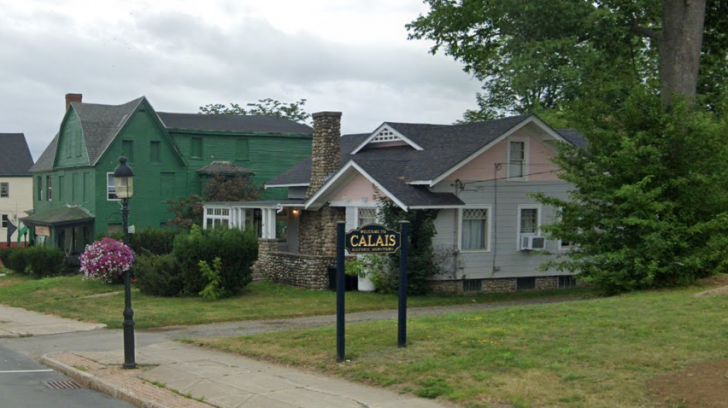
Calais sits in the far northeastern part of Maine, surrounded by Canada on three sides.
This small city of 3,000 people ushers thousands of international travelers back and forth between New Brunswick and Maine at one of the largest crossings in the state.
The St. Croix River splits the two countries, with some of the most historical parts on the American side.
The tides strongly influence the river, and as a result, this is one of the most volatile tide areas in the country, rising and falling as much as 50 feet a day from the Bay of Fundy.
No matter which side of the river you are on, this is a fairly remote region, with St. John being the largest nearby Canadian city, about an hour away, and Bangor, Maine, on the American side, about two hours away.
Two-lane, somewhat torn-up highways lead the way to Bangor or the Maine coastline, so winter travel can be treacherous.
Calais (“callous” – rhymes with Dallas) is still a city with quintessential New England charm.
Nearby Moosehorn National Wildlife Area provides plenty of outdoor adventures for all seasons.
The wonders of Bar Harbor and Arcadia National Park are just two hours away.
This region is home to the first French settlers, who eventually abandoned the settlement after a year due to a harsh and deadly winter.
It would be another 150 years before it was permanently settled and turned into a shipyard town.
Calais was also one end of the first international telephone exchange with a call to St. Stephen, New Brunswick, Canada.
Warnings & Dangers in Calais
OVERALL RISK : LOW
Calais hasn’t seen more than six violent crimes in a year since 2014, and you’re more likely to see a moose than be a crime victim. This is a great feat, considering how many people cross this border each year.

TRANSPORT & TAXIS RISK : LOW
You’ll need a vehicle here as taxis, rideshares, buses, and trains are scarce in this region. Calais itself isn’t big enough to have public transportation, and getting anywhere outside the city would cost an arm and a leg in taxi fares anyway. Use caution on the winding, narrow roads and watch out for potholes and torn-up sections of roadway.

PICKPOCKETS RISK : LOW
One purse snatching was reported in 2021, but there’s still a low risk if you use the basic safety precautions. If you’re crossing the border for the day, limit what you bring and review the rules for items that are not allowed across the border.

NATURAL DISASTERS RISK : MEDIUM
Winters can be intense, with more than six feet a year on average, and flooding is always a concern, especially with the volatile tides. Hurricanes can happen but aren’t as common as in southern parts of Maine or the eastern seaboard. Bitter cold is another risk, as wind chills can drop to dangerous levels.

MUGGING RISK : LOW
Calais has seen one robbery since 2015, so there’s another low risk for you. Robbery rates are fairly low across the entire state of Maine.

TERRORISM RISK : LOW
While border crossings could always be considered a terrorism entrance point, the real risk here is illegal drugs crossing the border as America faces an opioid and fentanyl crisis. In fact, some of the most recent crimes in this area are related to drugs. There’s a low risk for tourists, but don’t ever carry something across the border for someone else, no matter what the sob story is.

SCAMS RISK : LOW
There aren’t any tourist advisories about scam warnings, but don’t try to sneak anything across the border. U.S. and Canadian Border Patrol are very thorough and don’t give warnings.

WOMEN TRAVELERS RISK : LOW
This is a safe region for women, but in winter, they should be aware of the ongoing cold for months at a time and dress accordingly. Wilderness survival skills are important, and you should have a working knowledge of how to interact with wildlife (for example, don’t. Moose can easily stomp you to death).

TAP WATER RISK : LOW
The 2021 Water Quality Report shows full compliance and no violations. In 2022, residents were warned about a water quality violation resulting from excessive levels of trihalomethanes. Extended exposure to this byproduct can lead to liver cancer. As of June 2022, Calais was once again meeting all water quality standards.
Safest Places to Visit in Calais
VisitMaine.com has a section on Calais with things to do, the best restaurants, hotels, and campgrounds.
For information about visiting New Brunswick, Canada, visit tourismnewbrunswick.ca.
The “.ca” signifies it’s a Canadian website address.
The section of the St. Croix River from Milltown to Calais is full of rapids and whitewater adventures during the warmer months.
This two-mile stretch has rafting good for beginners and moderate rafters.
Waves up to three feet make the trip exciting but not too dangerous.
The Maine Visitor Information Center is located in Calais with one of the most robust selections of brochures and tourism ideas.
From there, the Calais Waterfront fans out in each direction, hugging the curve of the city on the American side of the border.
The St. Croix Island Visitor’s Center is a beautiful and historical spot where you can learn about the indigenous people of this land and European settlement attempts.
While the surrounding park is open yard-round, the statues along the trail are covered, and the visitor’s center is closed during winter.
The island itself is not open to the public.
Moosehorn National Wildlife Refuge holds 30,000 acres of various ecosystems to explore and stunning wildlife interactions.
You can also experience the intense rise and fall of the tides here or explore a marsh or lake.
The refuge is open throughout the year, but winter temperatures can be dangerously low, so dress in warm layers and don’t overexert yourself.
For a smaller outdoor experience, Devil’s Head park is just over 300 acres of woods and marsh, tracking the river until it joins Passamaquoddy Bay.
You’ll see across the river into Canada while enjoying rocky cliffs and wildlife.
Debating if you should cross the border into Canada where St. Stephens sits?
Here’s a sweet reason why you should – it’s Canada’s Chocolate Town.
Since 1873, the Ganong family has flourished with candy and chocolate concoctions.
A chocolate museum is attached to the shop, and if you time your trip right, you can visit during Chocolate Fest.
Places to Avoid in Calais
Regarding crime, you don’t need to worry about areas that are too dangerous or sketchy to visit.
You should stay off the private property along the water.
I’m sure the homeowners are tired of hearing, “But this is my first time in Maine!” or other reasons for trespassing.
There are plenty of public waterfront places.
Whitlock’s Mill Lighthouse is the last lighthouse built in Maine while being the northernmost lighthouse in the country.
Sounds like a great place to visit, right?
Well, you can’t.
It’s on private property, and the owner goes to great lengths to keep trespassers away.
You can get a great view of it from the nearby rest area if the trees have shed their leaves.
Powerful tides and cold water make swimming or scuba diving dangerous.
The current is swift enough to carry away a novice boater or swimmer.
You just haven’t experienced current and tide volatility like this before.
This is about as remote a region in Maine as you can find.
One of the few reasons people come this far north is to cross the border or get as far away from big cities as possible.
You’ll need to be rugged, tough, and outdoorsy to have any hope of enjoying your time here.
When you’re searching for information about this small town, be sure to add “Maine” to the search, as there’s a Calais in Vermont and France.
Safety Tips for Traveling to Calais
- Calais does have its own police department, and you can reach the chief at (207)454-2752 if you have questions. You call 911 in an emergency and 1-800-432-7303 for non-emergency dispatch calls.
- You’ll need a four-wheel drive vehicle in Calais. The reason in winter is obvious, but spring brings a lot of mud in this remote area with dirt roads and outdoor areas that can have mud several feet deep.
- Stay on top of the tide schedule. With fluctuating heights of 24 feet, you could cross a section of rocks that quickly becomes covered in swift-moving water. Those rocks are also covered in slippery algae, and you could end up in cold water and risk your body going into shock. If you don’t know how to check tide schedules online, you can call the ranger station at (207) 454-3871.
- Use bug spray here that contains DEET, and check the website for each park you visit for alerts about potentially dangerous bugs. Ticks are prevalent in this region and can carry Lyme Disease. Mosquitos can carry West Nile Virus.
- One of Maine’s most dangerous stretches of roadway is between Calais and Macias. This two-lane road has many hidden driveways and semi-trucks. Cars crashing after veering out of the lane are common here. Keep your eyes on the road, and don’t use your mobile device while driving. Use New England 511 to check road conditions before you venture out anywhere. This stretch of road will be undergoing a $33 million rehabilitation, so you might also have to contend with construction delays.
- Anglers need a fishing license from the Maine Department of Inland Fisheries and Wildlife. Hunting licenses are available but require more education and safety training. You’ll need a non-resident license. You can purchase that online or at the Calais City Building.
- Ferry Point, Milltown, and International Avenue have border crossings into Canada for passenger traffic, but International Avenue is the largest and most advanced one. All the crossings are open 24 hours a day except for Milltown, which is open from 6:00 am to 6:00 pm.
- Be prepared with the proper documents at the border; the U.S. is much stricter with required documentation. Check the border patrol website for each country, so you can safely get to Canada and back. Any trusted traveler program like NEXUS, SENTRI, or FAST is a preferred way to…
