
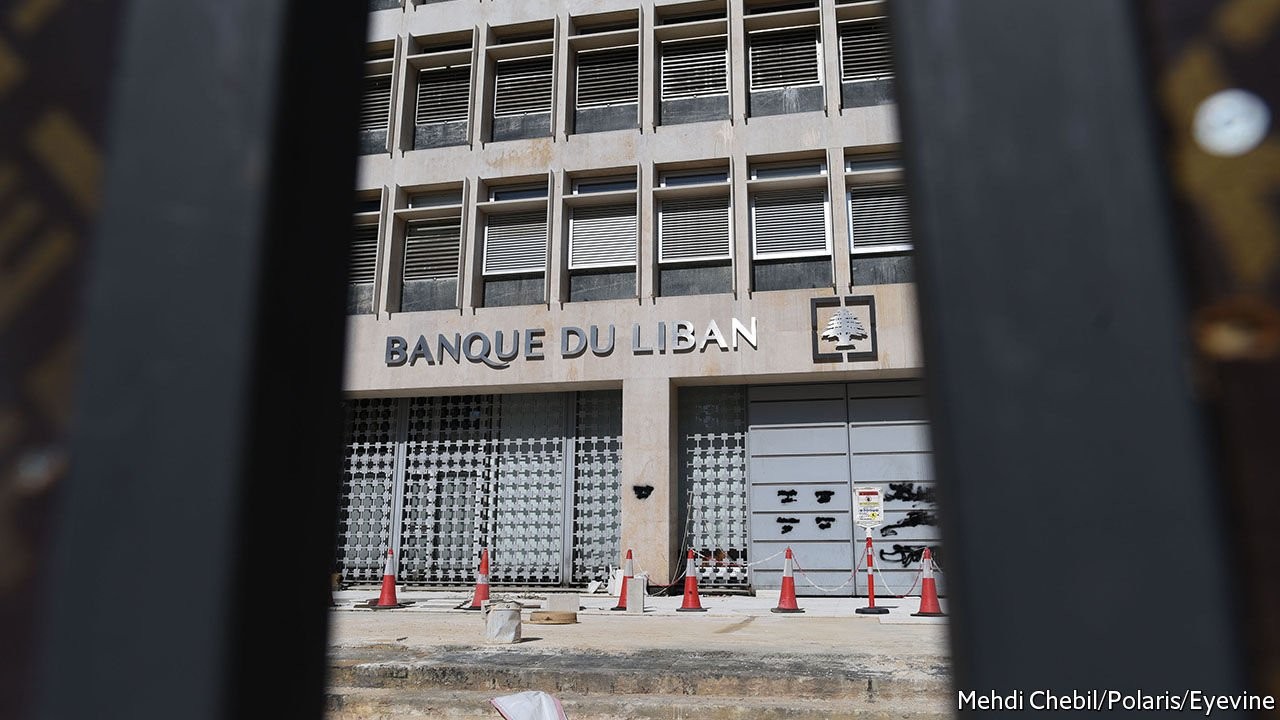
THIS WAS not how Rebecca Ego planned to use her law degree. In 2020 she was accepted into a master’s programme in America. It would cost $20,000 after scholarships, a sum she had in the bank. In Lebanon, though, getting money out of the bank is almost impossible: lenders have imposed harsh, arbitrary capital controls amid a financial crisis. Ms Ego was told she could not withdraw her funds.
Like hundreds of Lebanese, she sued her bank for breach of contract. The case has languished for two years. One of her banks subsequently shut her account, cashing out her savings in a cheque no other bank will accept. “There’s no legal basis for any of this,” she says. “But there’s no judge who will say that.”
For almost three years, Lebanon’s banks have been zombies. The crisis dates to 1997, when the central bank, the Banque du Liban, pegged the pound at 1,500 to the dollar. It sustained the peg by borrowing dollars from commercial banks at double-digit interest rates, a state-run Ponzi scheme that unravelled in 2019.
Lebanon defaulted the following year. Losses in the financial sector are estimated at $68bn (130% of pre-crisis GDP). Earlier this year the pound sank as low as 34,000 on the parallel market, a 96% depreciation.
On April 7th the IMF reached a deal with Lebanon, which could include a $3bn loan. Before the fund’s board votes on the package, though, it wants the Lebanese government to take steps to restructure the financial sector, such as by passing a law…
