
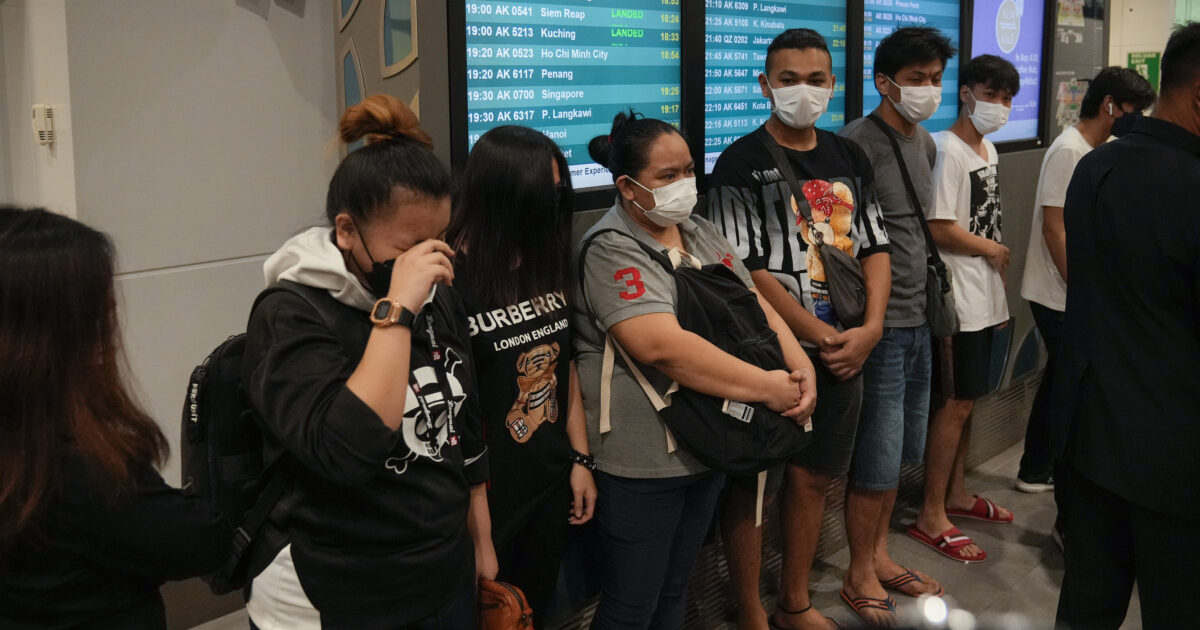
Miracle, an Indonesian woman, wanted a reasonable salary so she could save for retirement. It wasn’t long after she accepted a job as an online marketer and flew to Cambodia that she realized she would never receive the promised money or housing. Instead, her employers forced her to scam people while holding her prisoner in the compound where she worked. If she failed to meet the revenue target set by her employers, they physically punished her. They told her that to gain her freedom, she had to pay $2,800. Instead, Miracle was rescued through the joint efforts of the Cambodian National Police and International Justice Mission.
Miracle is one of an estimated 27.6 million human trafficking victims worldwide. In Cambodia, at least 100,000 people still work like she did in online cryptocurrency, investment, and gaming scams. In the perfect storm of COVID-19 lockdowns and economic hardship, traffickers capitalized on people’s willingness to take greater risks to find a job. These types of scams burgeoned and found safe harbor in countries with low criminal accountability, like Cambodia.
The World Justice Project ranks Cambodia 139th of 140 countries in “civil justice” and last for “free of corruption.” Nearby countries Myanmar and Laos allow criminals to transport trafficking victims across their borders and likewise rank low on the rule-of-law scale.
Unlike many types of trafficking that prey on the poor, scam traffickers entice young, multilingual…
