
Here’s a scene you might be familiar with: It’s the weekend after Thanksgiving, and you find a minute to check out some online deals. An item comes on the screen with way more features than you expected, at a much lower price than you thought possible. It might be sold by an unfamiliar website or one you’ve used time and time again.
You press Add to Cart, enter your credit card details, and pull the trigger. Satisfied with your deal-hunting, it’s time to celebrate with a fresh plate of leftovers.
But then a few days go by, and things get weird. Maybe the item hasn’t arrived—and you haven’t received a shipping notification. Then you start to see strange emails and texts. Or the item arrives, but it’s completely unusable, and there’s no customer service to help.
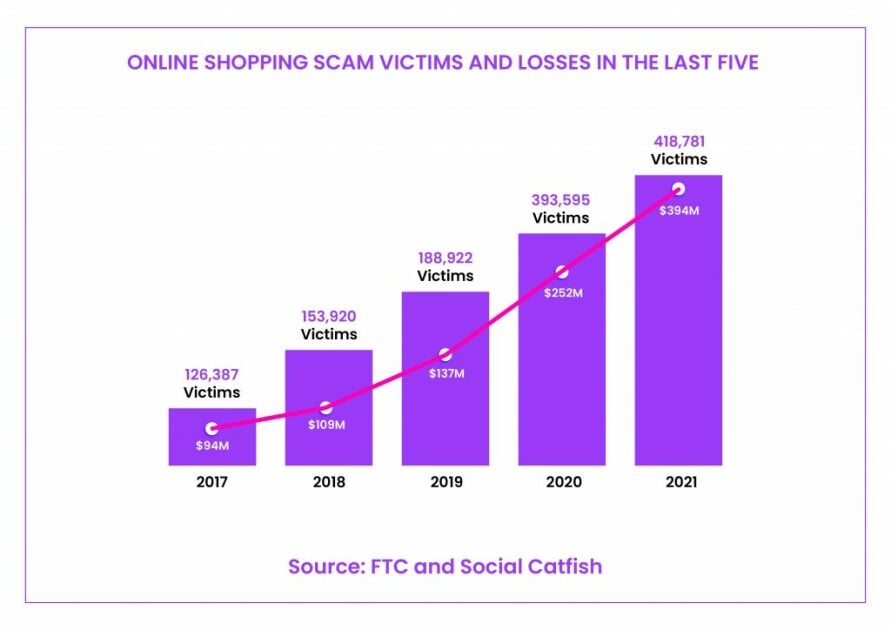
Online holiday shopping scams are a huge issue that has only worsened over time. The situation this year may be particularly grim, as consumer spending is expected to hit another record high ($209.7 billion(Opens in a new window)), paired with a deeper desire for deals after 2022’s record inflation rates. And more shopping directly correlates with more scams, according to a study(Opens in a new window) conducted by Adobe and Social Catfish. Last year, over 400,000 victims lost $392 million while shopping online, with each victim losing an average of $150.
(Credit: Adobe, Social Catfish)

(Credit: Federal Trade Commission, Social Catfish)
At the same time, it may be harder to detect suspicious deals this…
