
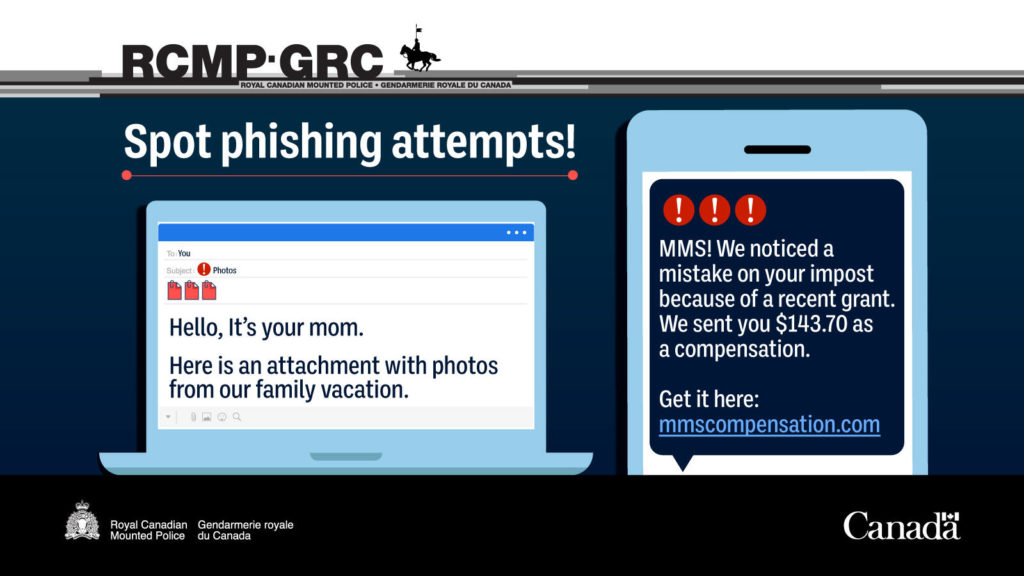
In the past few weeks, the Kimberley RCMP, via their social media page, have been educating Kimberley residents about phishing.
The Canadian Anti-Fraud Centre reports that it received 7,190 reports of phishing last year. anti estimates that only five per cent of phishing attempts are reported.
Phishing is an attempt to get your personal information. Common phishing tactics are posing as government agencies, often the Canada Revenue Agency; law enforcement impersonations; bank impersonations, offers of refunds, and more, even a family member looking for help. These can come in the form of texts, emails or phone calls.
The message may claim that you need to update your account or that your tax refund is ready. Whatever the message is, it’s an attempt to trick you into providing your personal or financial information, says the CAFC.
A variation of phishing scams are messages with minimal text that encourage you to click on links or download attachments. The message may seem to be a receipt from a recent purchase, a delivery notification, or something more urgent, such as a notice to appear in court. If you click on the link or attachment, your computer is infected with a virus or malware.
The CAFC offers these quick prevention tips:
• Don’t click on links from unsolicited messages
• Don’t download attachments from unsolicited messages
• Watch for spelling mistakes
• Don’t trust a message just because the email address looks legitimate; fraudsters can…
