
If you can spot a scam, you can stop a scam. Here are three things to look out for: celebrities, unknown request, investment opportunities.
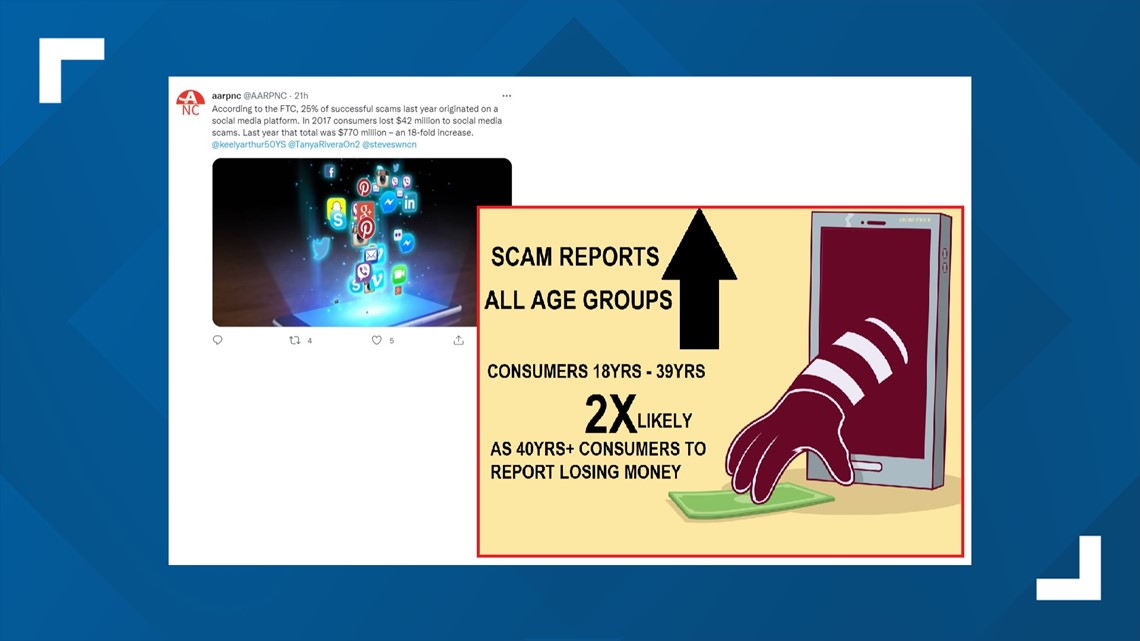
GREENSBORO, N.C. — AARPNC’s post on Twitter says that 25% of successful scams originated on social media. The stat is from the Federal Trade Commission.
To add to that stat, the number of scam victims went from 46,000 people in 2020 to 95,000 in 2021. When you look at the money lost, the numbers are even more jaw-dropping, from $258 million in 2020 to $770 million in 2021.
Now, you may think because AARP posted this, all the victims are over the age of 50. Nope.
The FTC stats confirm reports of scams were up among all age groups, but consumers 18 years to 39 years were more than twice as likely as those ages 40 and older to report losing money to social media-induced scams.
An AARP volunteer talks about how to spot a scam and gives three points:
Don’t accept requests from people you don’t know
Celebrities that want to connect with you, are fake
Anyone offering investment opportunities is a scam
The whole idea is, that if you can spot a scam, you can stop a…
