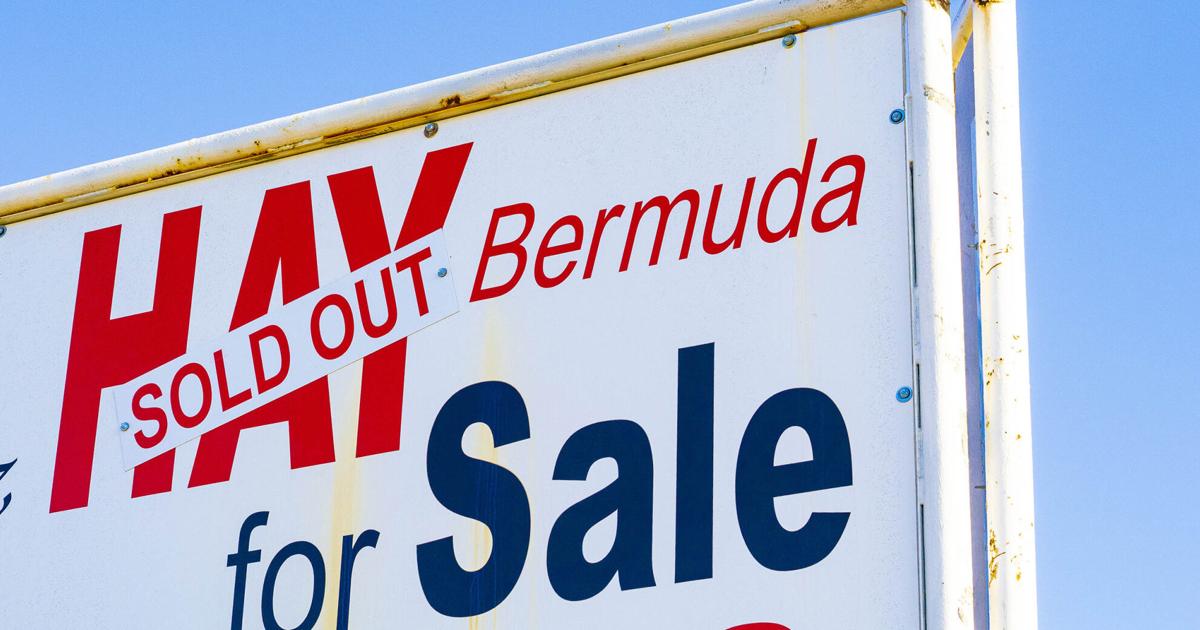
Livestock owners who plan to purchase hay over the next few months need to make careful and informed decisions to protect their animals, especially when purchasing hay from out of state.
Buyers should be aware that the drought has significantly impacted forage quality this year. Low hay yields resulted in many producers baling up failed crops and other grass varieties not typically harvested as a forage. As a result, overall hay quality is lower.
“During the last drought, there was a lot of hay baled very mature along roadsides and abandoned fields with the lowest density setting the baler could handle to produce light, low-density bales then transported across two states. Hay should be tested before purchase and priced per ton instead of by the bale.” said Paul Beck, Oklahoma State University Extension beef nutrition specialist.
Mark Johnson, OSU Extension livestock evaluation specialist, advises answering these questions when buying hay:
-
Where is it located? Hay cannot be moved from fire ant endemic areas without taking steps to ensure there are no fire ants being transported to areas designated free of fire ants.
-
When was it baled? 2021? 2022? Older hay may have more spoilage.
-
How has it been stored? In a barn or outside? On the ground or on pallets?
-
How is it wrapped? Net wrapped bales keep better than those wrapped in twine.
-
What is the size…