
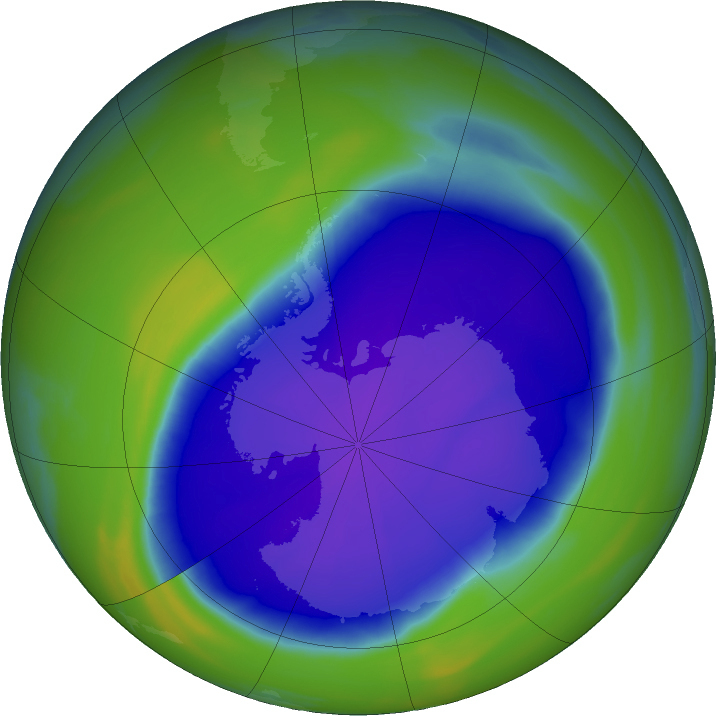
The hole in the Antarctic ozone layer shrank to about 8.9 million square miles in 2022, continuing a year-over-year trend, according to the latest data from NASA and the National Oceanic and Atmospheric Administration (NOAA).
The stratospheric layer, which absorbs the majority of hazardous ultraviolet radiation from the sun, thins above the Antarctic during the region’s spring season, which extends from September to December. Chemicals from man-made substances attach to polar clouds throughout the region’s winter and then damage the layer once the sun rises.
“Over time, steady progress is being made, and the hole is getting smaller,” said Paul Newman, chief scientist for Earth sciences at NASA’s Goddard Space Flight Center, said in a statement. “We see some wavering as weather changes and other factors make the numbers wiggle slightly from day to day and week to week. But overall, we see it decreasing through the past two decades. The elimination of ozone-depleting substances through the Montreal Protocol is shrinking the hole.”
Atmospheric scientists had been concerned the January eruption of the Hunga Tonga-Hunga Ha’apai volcano in the South Pacific could lead to a wider than usual hole after a 1991 eruption had similar effects, but no such extra depletion was apparent in the…
