
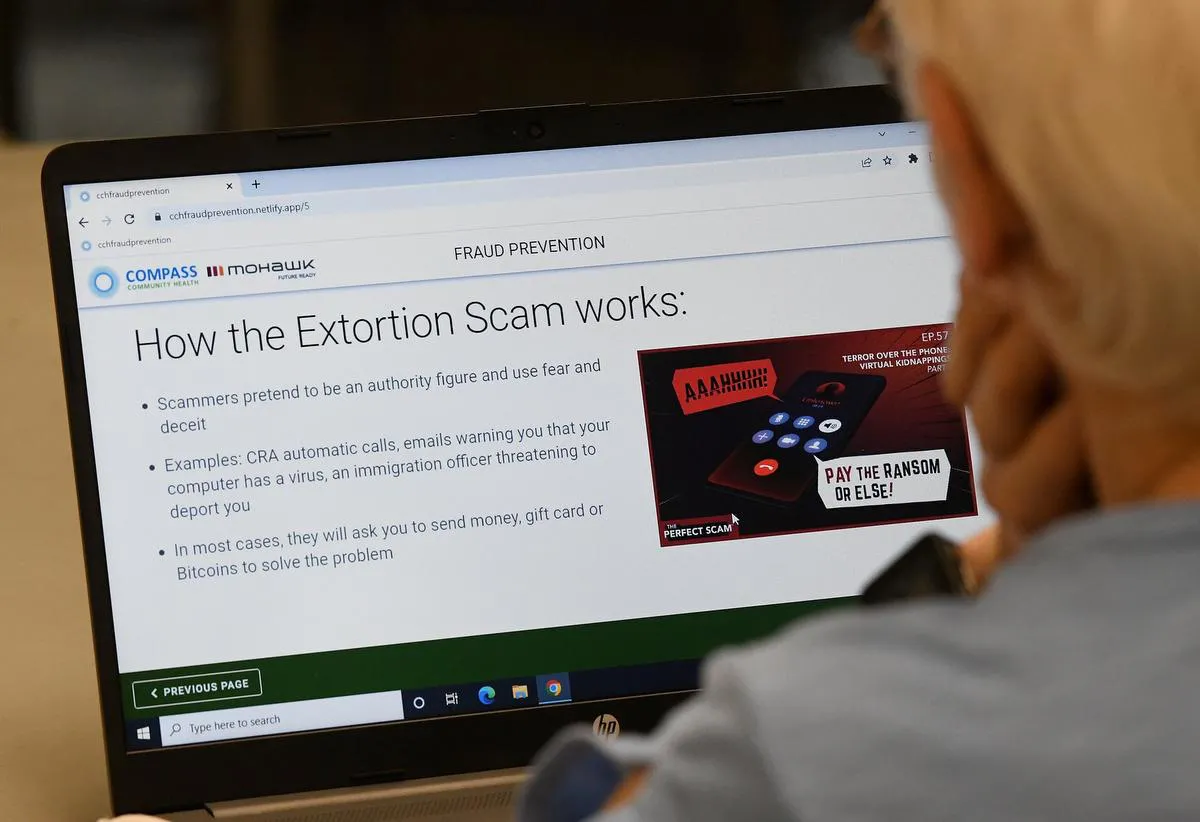
Because of the interconnected nature of the internet, things rarely take place in the online world that do not reach out and affect many other people. This was brought home to me when one person fell victim to an online scam that ended up threatening to defraud other well-intentioned people.
I received an email from a casual acquaintance asking if I could help him out, and I replied positively. A second email said that he wanted to send some Google Play cards, which can be used to buy movies, music, and apps online at Google, to a young woman suffering a terrible disease.
However, my friend said he was unable to locally purchase any Play cards so could I buy some, send the activation code numbers of the cards by email, and I would be reimbursed later by e-transfer. Play cards are non-refundable and untraceable once activated.
I became suspicious when the second email contained spelling errors and the return address had changed to a Gmail address. I phoned my friend and, when asked about the emails, was told he no idea what I was talking about but, coincidentally, he had suddenly stopped receiving any emails at all.
I visited my friend, checked his computer, and uncovered a truly devious scheme. He had fallen for a “phishing” email purporting to be from his internet service provider (ISP) which warned that a password reset of the email account was required immediately in order to continue the service. He had clicked a link in the email, been taken to a “fake” account…
