
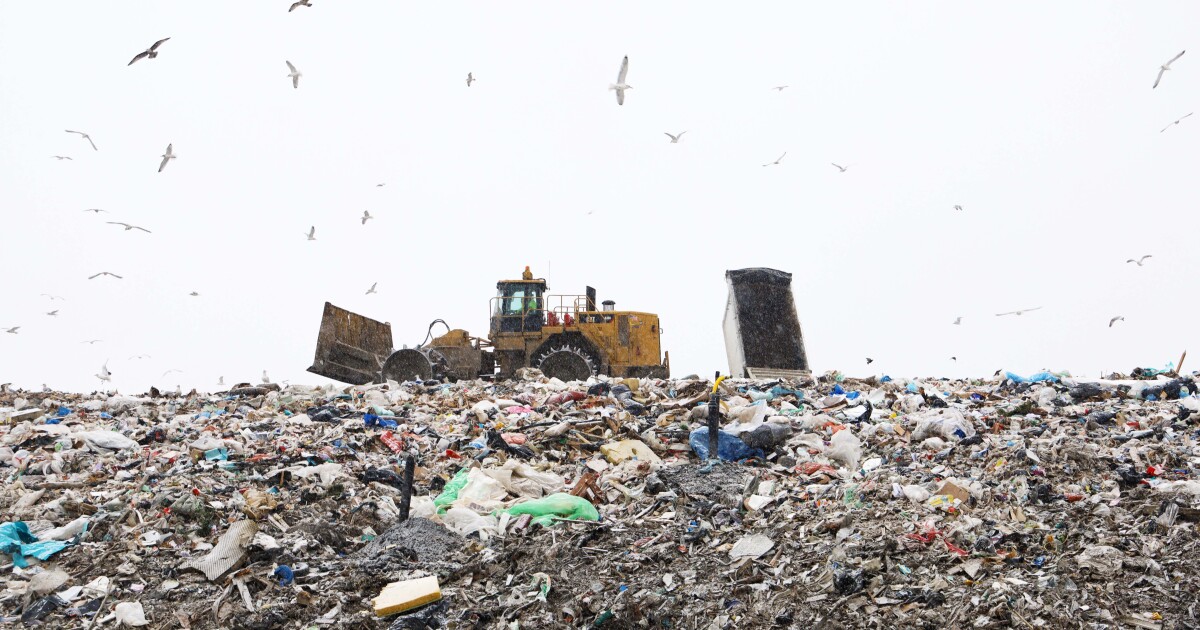
Every day, dozens of trucks loaded with waste drive through the gates of Juniper Ridge Landfill in Old Town.
Near the entrance, they’re greeted by a sign listing banned items, including refrigerators, propane tanks and dead animals. And at the bottom, in large red letters, is a warning: “Juniper Ridge Landfill only accepts waste generated in Maine.”
That rule — no waste from other states — has been a guiding principle of Maine’s trash laws since the late 1980s. It’s partly why the state even bought Juniper Ridge in 2004.
It’s also misleading: Other states have sent hundreds of thousands of tons of construction waste to the state dump over the years.
Massachusetts is the biggest exporter of all that wood, brick, asphalt and other debris, much of which is banned from its own landfills. The imports have accounted for almost a third of what’s buried in Maine’s state landfill in some years.
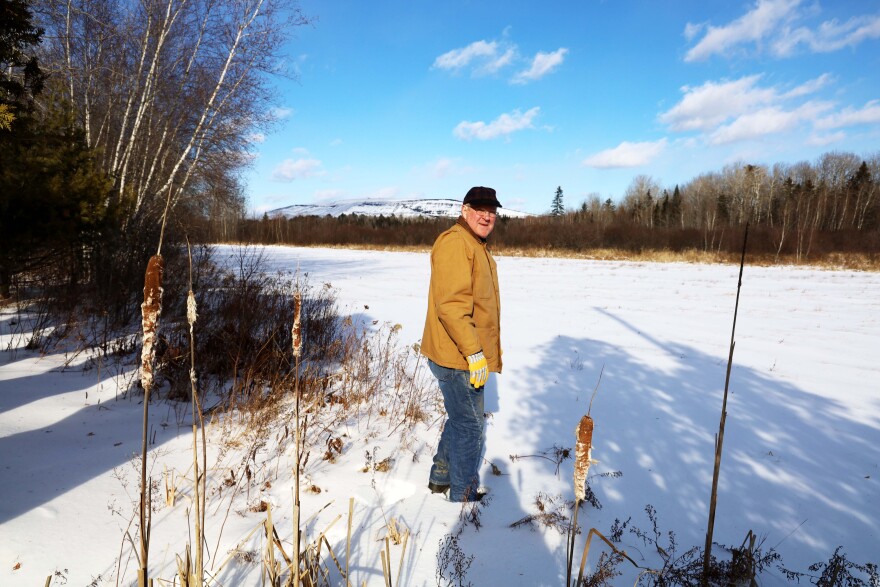
“Anything in there has to be ‘generated’ in Maine. Well, that’s kind of a trick word. It doesn’t mean all of this was thrown away for the first time in Maine,” says Ed Spencer, an Old Town resident who lives less than two miles from the dump. “The whole thing was a scam, and now it’s just grown and it’s become an established waste pathway.”
More than 60% of the licensed space at Juniper Ridge has now been used up, according to state records.
Along with the steady imports of construction debris, the landfill has received growing amounts of waste from within Maine, including construction materials, household garbage and sewage sludge. That has nearly doubled the speed at which it’s being filled in recent years, putting it on track for another expansion in six years.
Environmental activists, neighbors of the landfill including the Penobscot Nation and a growing group of lawmakers have decried the unique set of circumstances that allow private companies to dump so much material from Massachusetts into the state facility, despite laws that were once meant to prevent that.
“It’s really just filling up the Juniper Ridge Landfill,” says Peter Blair, a staff attorney at the Conservation Law Foundation. “It’s a huge amount of the available capacity, which is just increasing the need for future expansions and minimizing the amount of Maine-generated waste — true, Maine-generated waste — that can go there.”
Lots and lots of construction debris
Many different types of material are buried in Juniper Ridge, including ash from waste-to-energy incinerators, food scraps and other garbage that Mainers leave at the curb, and the sludge that communities remove from their wastewater.
By far, the most material comes from another source: construction and demolition sites around New England. That broad category now makes up about two-thirds of what’s buried in the state landfill each year — and it’s at the center of the critics’ concerns.
Some of that debris comes from inside Maine. The contractor that runs Juniper Ridge, Casella Waste Systems of Vermont, generally buries it in a raw form, without removing recyclable materials.
Those in-state deliveries have doubled in the last decade, topping 300,000 tons in 2020, according to data reported to the state Department of Environmental Protection.
Esta Pratt-Kielley
/
Maine Public
More controversially, Casella has accepted consistently large amounts of construction waste from other states, primarily Massachusetts but also New Hampshire. They have totaled around 200,000 tons in some years — about the weight of two aircraft carriers.
The out-of-state material goes on a different type of journey before it can land in Juniper Ridge.
First, independent Maine truckers who have already delivered goods outside the state will stop by a transfer station, where they collect the debris. Then, they drive that material back to Maine and deliver it to a facility in Lewiston called ReSource.
ReSource Lewiston, which was a subsidiary of Casella until 2013 and still works closely with the landfill operator, removes a small amount of wood, metal, drywall or other material to sell for recycling.
It sorts the rest of the debris into two different piles: large bulky objects such as carpets and mattresses, and smaller materials that it has ground into a mulchlike mix. It then loads that sorted waste onto semi trucks heading another 120 miles up Interstate 95 and pays Casella to bury it at Juniper Ridge.
Before it’s buried, Casella says that the out-of-state debris has two primary uses.
The mulchlike mix is poured over raw trash each day to reduce its odor and prevent it from getting carried away by wind or animals. And bulky objects are mixed with incoming sewage sludge so that it forms a stable layer in the landfill.
A loophole for out-of-state waste
While Maine law only allows Juniper Ridge to accept waste “generated” within the state, a longstanding loophole has allowed the debris handled by ReSource to be considered Maine-generated.
With that new definition, ReSource has sent an average of about 190,000 tons of waste — roughly 90% of it from other states — to Juniper Ridge each year from 2011 to 2020, according to data it reports to the Maine Department of Environmental Protection.
For 15 years, Massachusetts has banned many types of construction debris from its own landfills, as part of a broader effort to reduce waste and preserve its own limited landfill space.
But in effect, the Bay State has shifted more of that burden onto other states including Maine. In the last decade, that loophole has allowed out-of-state companies to send more than a million tons of construction waste to Juniper Ridge by way of Lewiston, according to Maine DEP data.
Meanwhile, those who live in the shadow of Juniper Ridge resent that their community has become a dumping ground for so much waste from outside Maine.
“The imports mostly come from Massachusetts, which has basically strengthened its landfilling rules over the years,” Spencer says. “Maine needs to follow suit, or we’re just going — this is going to be full.”
Spencer, who started building his home in West Old Town in the late 1970s, has grown familiar with the nuisances that come from living near a dump.
He has made a living logging the surrounding forest, but there’s one section of quaking aspen that he hasn’t bothered to cut, since it hides the rolling hills of refuse that have risen beyond his property since the state bought Juniper Ridge in 2004.
Esta Pratt-Kielley
/
Maine Public
Still, that barrier has not stopped the rotting odor of sewage or garbage from reaching his home from time to time. On a handful of occasions, he says, “It makes you feel like you can’t breathe.”
Concerns about pollution
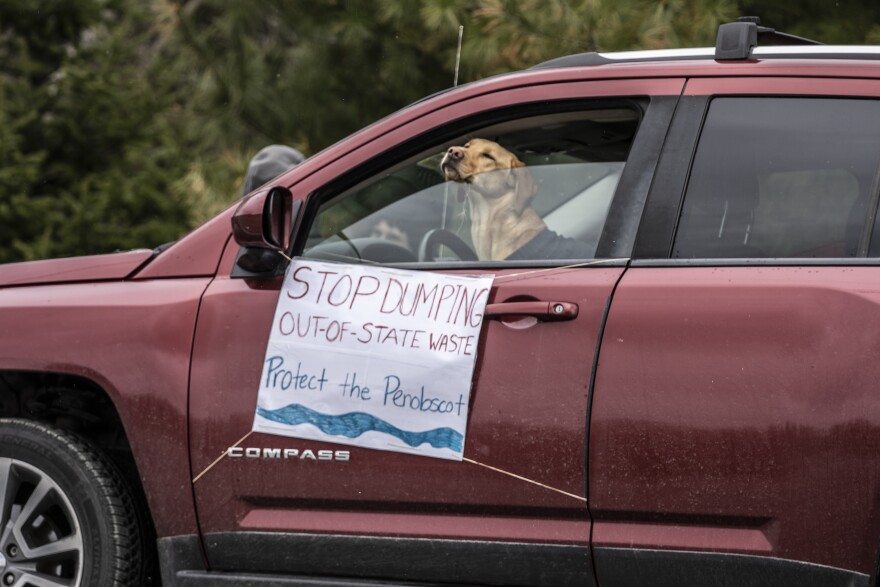
Members of the Penobscot Nation have also spoken out against the imported waste buried at Juniper Ridge, which is about four miles from their reservation on Indian Island. On Earth Day last year, they helped organize a caravan outside the landfill to protest the imports.
“There is enough garbage that we need to take care of here,” says Kathy Paul, a longtime tribal activist who was born and raised on Indian Island. “Why are they taking someone else’s?”
Although the majority of the landfill’s waste originates inside the state, tribal members fear the imported debris is increasing pollution in the liquid, or leachate, that seeps out of the landfill over time — in particular, a widely used group of chemicals known as PFAS.
“The stuff we see coming in, this oversized bulky waste, construction and demolition debris, we know it’s loaded with some classes of chemicals that we’re concerned with, particularly PFAS,” says Dan Kusnierz, the tribe’s water resources program manager. “Things like carpets, couches, upholstery, textiles, a lot of that type of material has been treated with PFAS-containing compounds.”
Nick Woodward
/
Maine Public
No studies have drawn a link between the landfill’s leachate — or the subset of its waste from other states — and contamination of the surrounding environment.
But as part of the state’s ramped up monitoring for PFAS in the last couple years, it has found PFAS in the Juniper Ridge leachate at levels much higher than the state drinking water standard — a standard that landfill leachate doesn’t need to meet.
Treating wastewater for PFAS contamination
The Maine Legislature is now considering funding a study of the best methods for removing PFAS contamination from the leachate of state landfills. There is also $1.6 million in a recent federal spending bill to fund a PFAS removal system at the Anson Madison Sanitary District wastewater treatment facility in Somerset County.
Under its state license, Casella collects the leachate and sends it to a pulp mill on the other side of Old Town, where…
