
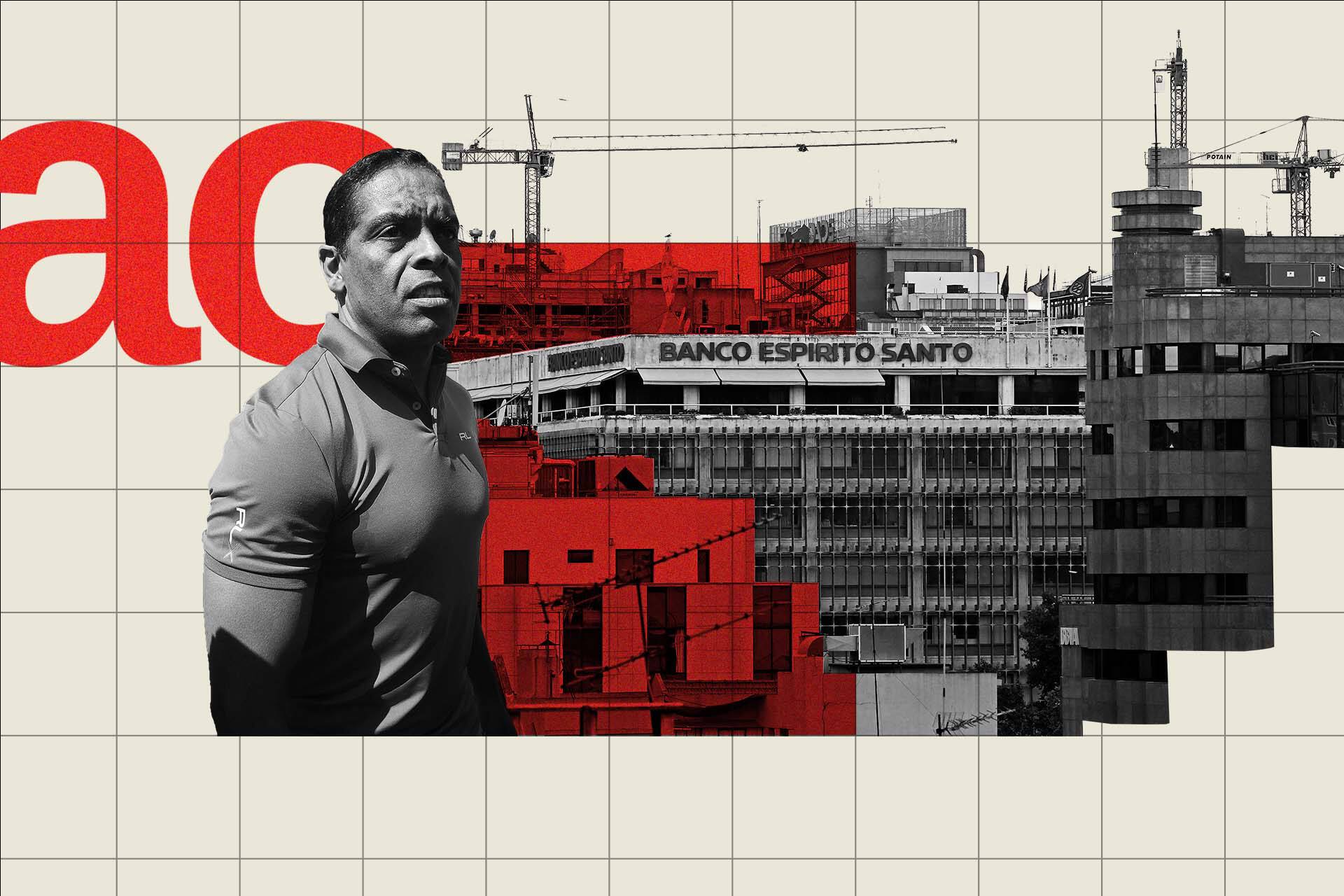
Álvaro Sobrinho, who led an Angolan bank that collapsed with billions of dollars of unexplained debts, is linked by new documents and testimony to a scheme to siphon hundreds of millions of dollars of government-backed financing for social housing. Sobrinho had 12 accounts in Suisse Secrets data, three of which were set up at the time of the alleged scam.
Key Findings
- The CEO of a company that was granted a 750-million-euro line of credit to build a housing project in Angola claims that banker Álvaro Sobrinho and his associates drew down the credit through a scheme involving offshore companies.
- Bank documents reviewed by reporters indicate that millions of dollars earmarked for the builder moved through Sobrinho’s bank, Banco Espírito Santo Angola, but were never sent on to the company.
- Around the same time, Sobrinho set up Credit Suisse accounts worth at least 78 million Swiss francs (over $72 million at the time).
- A financial management company involved in managing the line of credit wrote to the Angolan president to complain that Sobrinho’s bank was mismanaging the funds.
Controversial former banker Álvaro Sobrinho is under investigation in Portugal for allegedly embezzling hundreds of millions of dollars in taxpayers’ money through a Portuguese-owned bank he led in Angola, which was shut down in 2014 after running up unexplained multi-billion-dollar debts.
Now, new documents and testimony reveal a scheme seemingly designed to allow Sobrinho’s bank to manage and potentially siphon off hundreds of millions of dollars in government-backed money intended for a housing project in 2009.
Records from the Suisse Secrets leak show Sobrinho set up several accounts at Credit Suisse around the time of the housing scam. In total he had 12 accounts in the Suisse Secrets data, with the largest of them holding 78 million Swiss francs. At least 11 of these accounts are being investigated by Portuguese prosecutors, according to documents seen by reporters.
🔗The Suisse Secrets Investigation
The data was provided by an anonymous source to the German newspaper Süddeutsche Zeitung, which shared it with OCCRP and 46 other media partners around the world. Reporters on five continents combed through thousands of bank records, interviewed insiders, regulators, and criminal prosecutors, and dug into court records and financial disclosures to corroborate their findings. The data covers over 18,000 accounts that were open from the 1940s until well into the last decade. Together, they held funds worth more than $100 billion.
“I believe that Swiss banking secrecy laws are immoral,” the source of the data said in a statement. “The pretext of protecting financial privacy is merely a fig leaf covering the shameful role of Swiss banks as collaborators of tax evaders. This situation enables corruption and starves developing countries of much-needed tax revenue.”
Because the Credit Suisse data obtained by journalists is incomplete, there are a number of important caveats to be kept in mind when interpreting it. Read more about the project, where the data came from, and what it means.
Banco Espírito Santo Angola (BESA) was central in attempts to set up complex financing arrangements for the housing project, which was supposed to result in 1 million new low-cost homes intended largely for war veterans in Cazenga, near the Angolan capital of Luanda. In the end, the houses were never built.
The project was ultimately underwritten by the Angolan state, which agreed to grant a local construction company a government-backed credit line of 750 million euros ($1.1 billion at the time) to build the houses.
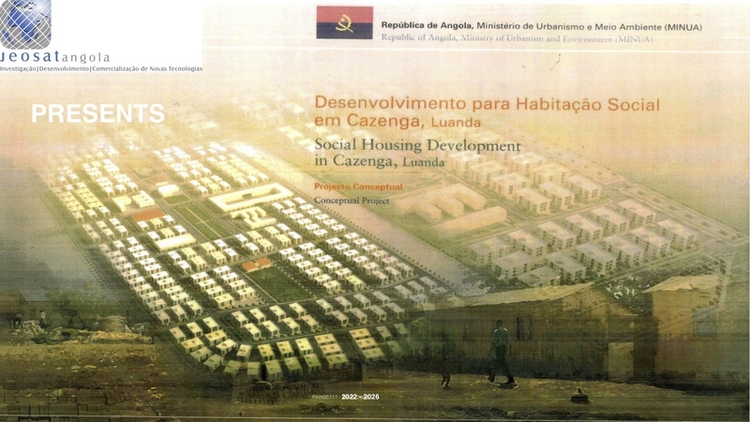
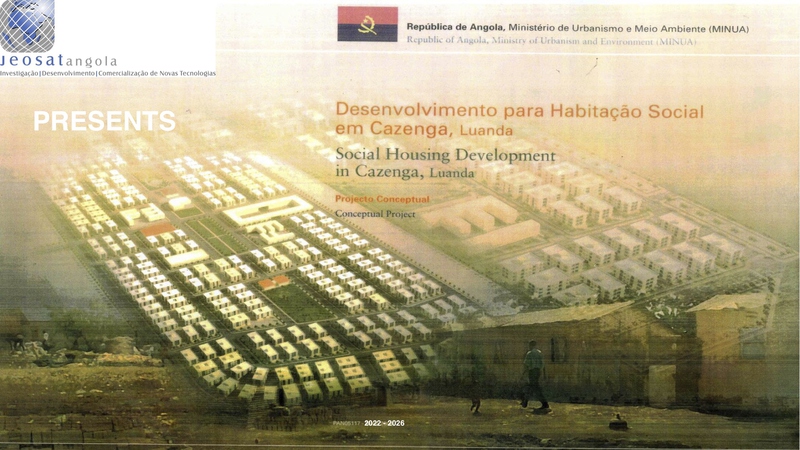
A brochure for the proposed housing project, which was never built.
The former head of Angola’s National Agency for Private Investment was critical of Sobrinho’s management of the process, according to a 2010 letter obtained by OCCRP.
Aguinaldo Jaime, the agency’s president at the time, wrote to Sobrinho to describe “legitimate concern” over how BESA was trying to handle the money for the housing project. The letter rebuked Sobrinho for attempting to inappropriately include third parties in the deal, creating the risk that public money would be lost.
The head of Jeosat Angola, the company that was supposed to build the houses, now claims that Sobrinho and his associates stole the funds connected to the project.
Jeosat’s CEO, Carlos Rodrigues, says he has filed complaints with U.S. and EU authorities alleging that BESA officials convinced him to set up an offshore company in the British Virgin Islands, also called Jeosat Angola, to receive the money for the construction project.
Rodrigues told OCCRP that he initially trusted Sobrinho and his deputies at BESA when they told him that it would be better to use offshore structures.
But then, Rodrigues claimed, they stopped communicating with him, took control over the offshore, stole his identity, and used it to set up other shell companies and bank accounts. He alleges this offshore setup was then used to drain the 750-million-euro credit line.
“What happened next destroyed my life: They took my passport, my credit line and opened up bank accounts all over the world, from Ireland to Portugal and the U.S.,” Rodrigues told OCCRP.
Rodrigues says the housing project was never built because of BESA’s deliberate efforts to undermine Jeosat’s access to financing.
“They used the entire credit line and put me in debt that I was never even told about,” Rodrigues said. He said he could not provide documentary evidence of his debt or of the credit line being used, saying the information was confidential and sharing it could jeopardize his legal case.
Bad Credit
The financing proposition for the housing project was complex.
BESA took the lead in building a consortium of banks to finance the deal, based on guarantees from the Angolan government. But it largely outsourced this work to Swiss financial management firm Weyhill, which was brought on board to identify European banks that could finance the project, then help manage the loans. Money for the project was to be disbursed in three tranches from banks in France and Liechtenstein through Weyhill and another financial management company, and would eventually be sent on to Jeosat in Angola, which had its account at BESA
Documents indicate that, at least at one stage, BESA was in line to receive a 30 percent commission for its role in this deal, equivalent to 225 million euros, although OCCRP could not verify whether this was ever paid out.
Letters and contracts obtained by OCCRP reveal disagreements among the consortium members from the very start. In April 2010, Thomas Sundell, the CEO of Weyhill, wrote a frustrated letter to Angolan President José Eduardo dos Santos. He complained that BESA officials had tried to convince Weyhill to pay the entire amount earmarked for the housing project — 750 million euros — to an Espírito Santo account in Dubai.
Sundell said he refused, so BESA executives tried instead to have the first tranche of financing — 250 million euros — sent to an account at BESA’s parent bank, Banco Espírito Santo in Lisbon.
“[W]e refused as there would be no money left to be sent to Angola [for the housing project],” Sundell wrote.
Sundell said BESA had sent “many pseudo-guarantees” throughout the process.
“What we understand they were trying to do … was getting this money for free from our institution and give it as a loan to Angola with high interest rates.”
– Thomas Sundell
CEO, Swiss financial mangement company Weyhill
“What we understand they were trying to do, His Excellency, was getting this money for free from our institution and give it as a loan to Angola with high interest rates,” Sundell wrote.
Even as all this was taking place, Rodrigues claims Sobrinho was engaging in offshore machinations. According to documents Rodrigues provided to OCCRP, Sobrinho set up a company in the British Virgin Islands called Jeosat Angola in September 2009.
Less than two weeks later, the Dubai outpost of Banco Espírito Santo wrote to Sobrinho’s assistant to say the offshore company had been set up and arrangements had been made for Sobrinho to be granted power of attorney over it, which would allow him to set up a bank account in Dubai in Jeosat’s name. (OCCRP did not find definitive evidence that the bank account was set up, and could not confirm whether any money was ever paid into it.)
Rodrigues says he initially gave his approval for all this, but soon found he had no control over the offshore company that bore Jeosat’s name.
Asked about Rodrigues’s claim, Sobrinho told reporters he should address his concerns to the Dubai bank, which was liquidated in 2014 with the collapse of Banco Espírito Santo. He said accusations that Jeosat money had been stolen were not correct, and that Jeosat opened an account at BESA because the bank’s parent, Banco Espírito Santo, “had the international reputation.”
Sobrinho also…
